Raby

Exotic Woods in the Furniture Collection at Raby Castle

Raby Castle’s partnership with the Furniture History Society (FHS) as part of the British and Irish Furniture Makers Online (BIFMO) research programme continued this year thanks to the financial support of the Iris Foundation, with another project bringing together students from across the globe. While previous students have looked into the secrets of our Week’s Cabinet The secret of the Thomas Weeks Cabinet and Raby’s links to a Cleveland House in London Reimagining interiors- Dining in Style, this project considered the origins of materials used to make key pieces of furniture in the collection at Raby Castle.

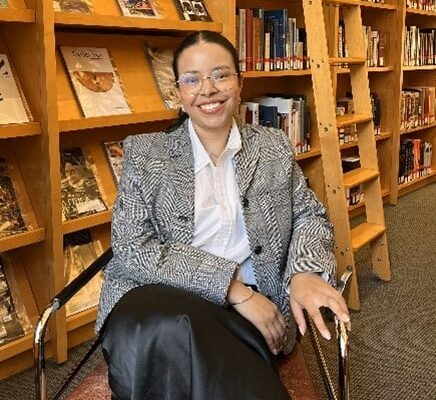
Ana Maria Orobio Pinzon

Exotic Woods in the Furniture Collection at Raby Castle

Introducing Ana Maria, Jessamy and Rosaleen

Three students were awarded an internship over the summer of 2025 to collectively research the trading history of wood materials, their import into Britain, and how this linked to individual items in Raby’s collection. The chosen students were drawn to the project because of their interest in understanding how the story of Britain’s colonial past, and the corresponding expansion of trade in global materials, is woven throughout decorative arts and historic interiors in ways that are not always visible.

Ana Maria Orobio Pinzon is a second-year student in Decorative Arts, Design History and Material Culture at Bard Graduate Centre in New York, with a varied background in Art History and technical woodworking in Colombia.

Jessamy Harvey has recently completed her Masters in Decorative Arts and Historical Interiors at the University of Buckingham, and also has a PhD in Spanish Cultural Studies. Her previous experience in research and records management was useful for her visit to the Raby archives, where she tried to better understand how some of the historical furniture at Raby found its’ way into the collection.

Rosaleen Williams currently works at Temple Newsham House in Leeds, and has completed her Masters in Art, Gallery and Museum Studies. Rosaleen’s particular interest is in ‘hidden histories’ that can be unveiled by documents and furniture.

‘For each of us, this project has allowed us to understand more about the links between economic history and historical furniture. Thanks to this project, we can now draw connections between disparate parts of the world and Raby Castle and we hope visitors to the website enjoy taking this global journey too.’


Furniture Collecting at Raby Castle

Raby Castle holds a rich and varied collection, thanks to the generations of Vanes who have lived here since it was purchased by Sir Henry Vane the Elder in the 1600s. It has seen three main periods of significant restoration, which implemented different styles within the interiors of Raby based on tastes of the time.

One such period was led by Henry Vane, 2nd Duke of Cleveland, who employed architect William Burn to work on the south front of the castle. Much of the collection of exotic woods at Raby Castle was contributed by the 2nd Duke, who was owner between 1842-1864.​ He commissioned high-quality furniture from leading British cabinetmakers, including Gillows of Lancaster, Holland & Sons and Morant. This included the commission for decoration and furniture for the Octagon Room in 1848 (subject of a previous BIFMO project- The history of the Octagon Drawing Room.)

Exotic Woods in the Furniture Collection at Raby Castle

The project

Through this project, Raby wanted to gain a better understanding of our furniture collection, particularly those made with materials which might have travelled across the globe and represented the methods of trade and transportation within the furniture making industry.

The students identified research questions to focus on, including:

  • Why are materials classified as exotic woods?
  • Where do these woods come from?
  • How and when was its trade important, and what was the wider political context at the time?

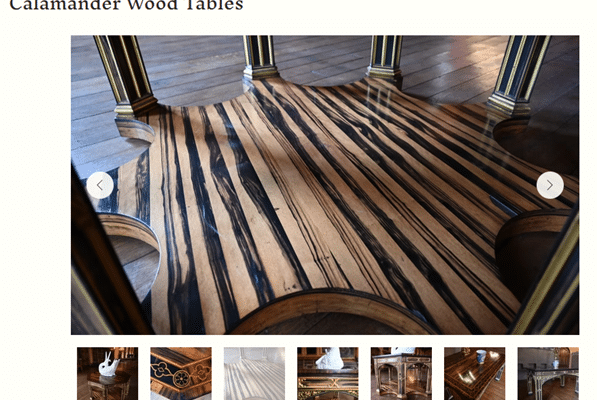
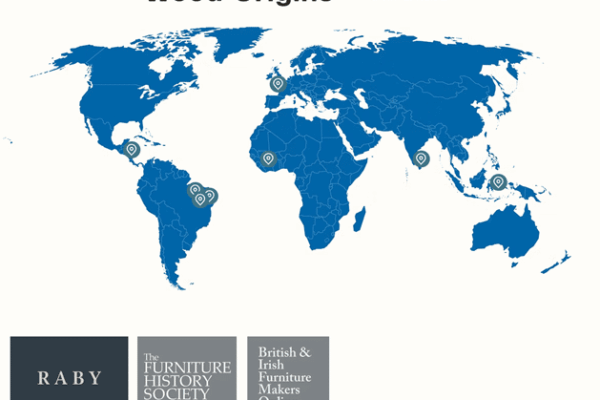
They combined wider research with looking into our historic inventories and archives, before compiling this into an interactive website. The website includes an interactive map of the geographical origins of some of the exotic woods found in the collection, a timeline of the wood trade and how this aligned with the European colonisation of territories in continents such as America, Africa and Asia, and an analysis of some pieces of furniture in Raby’s collection to help understand more about the collecting interests of Raby’s residents.

Sign up to the Raby Newsletter

Sign up to our newsletter today to receive weekly updates, exclusive offers and priority booking on our seasonal events.