Celebrate the simple things with Raby’s Sunday Socials
Sometimes the simplest things are the most rewarding: a walk through wintry landscapes, meeting friends old and new, flushed cheeks – and maybe even a hot freshly ground coffee at the end of it.
Introducing Social Sundays: a celebration of the simple things in life. Every Sunday in January and February, one of our friendly volunteers will be leading a walk through Raby’s Deer Park or around High Force waterfall. There’s no better way to discover our lush parkland and stunning landmarks than on foot, so wrap up warm and join us for an informal, accessible 45 minute walk with a group of like-minded people.
Come solo, bring your family or a friend (four-legged varieties on leads welcome, too) – the more, the merrier.
Social Sundays at Raby Castle Deer Park – Sunday 5th and 19th February starting at the horsebox ticket booth at 10am
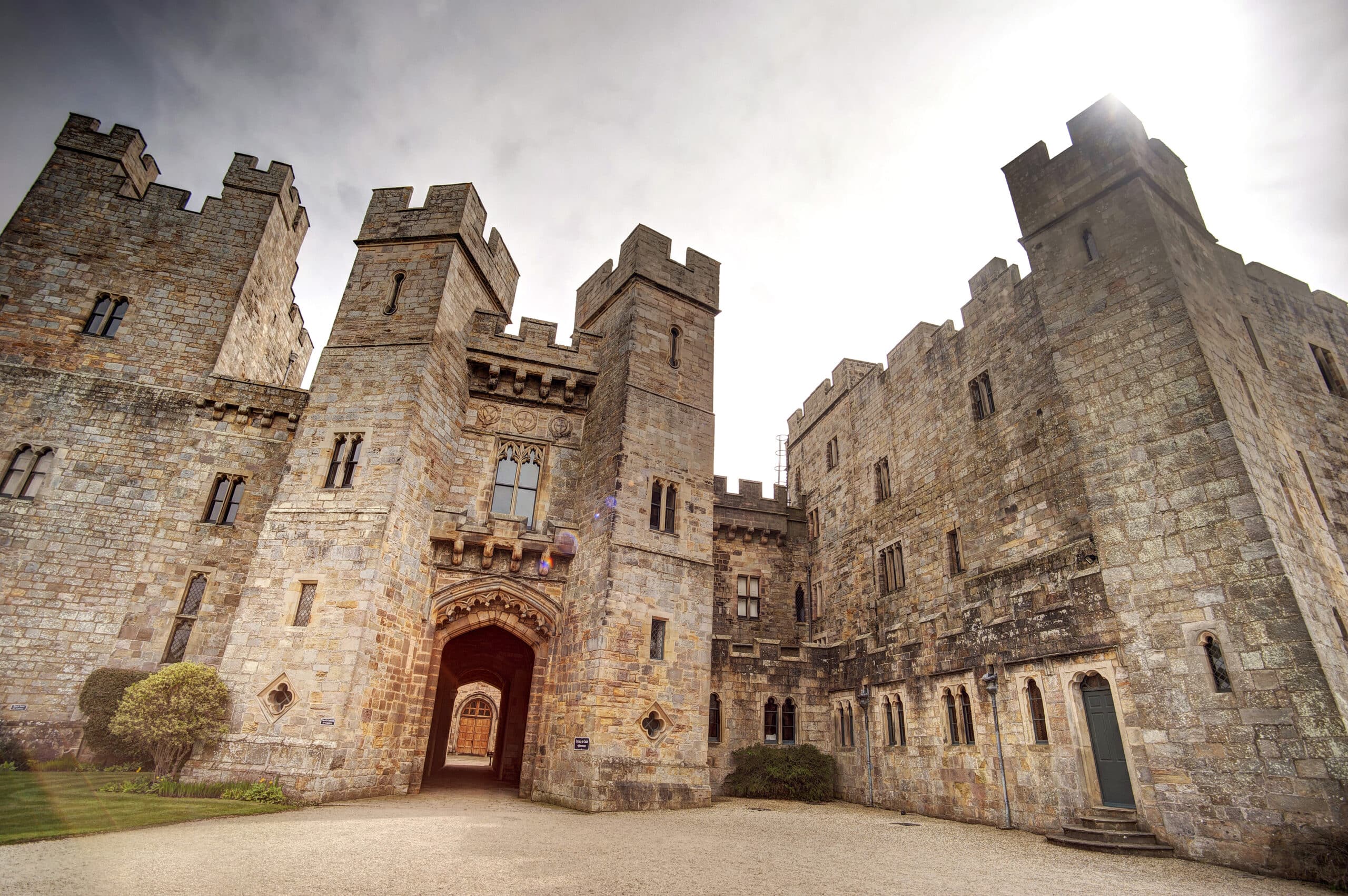
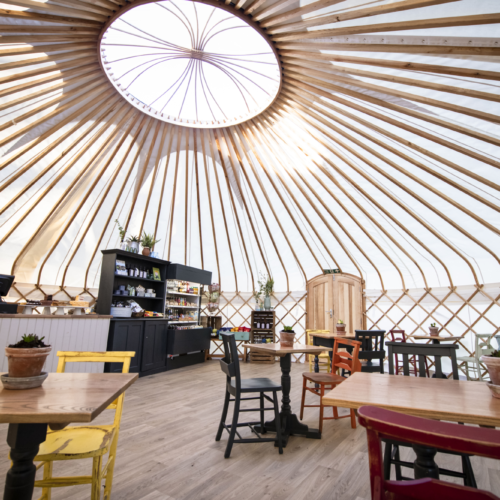
A walk-and-talk around Raby’s Deer Park is the ideal way to get your nature fix: think acres of ancient parkland, grazing deer and a backdrop featuring one of England’s finest medieval castles. Our friendly volunteer guide will be able to answer all of your Raby questions – and afterwards, feel free to pop into the Yurt Café for a coffee, sandwich or pastry, or browse in the Stables Shop.
Social Sundays at High Force Waterfall – Sunday 12th and 26th February starting at High Force Hotel at 10:30am
Or perhaps you’d like to discover one of England’s most impressive waterfalls? At High Force, experience the drama and power of a 21-metre cascade of white water tumbling into a gorge, with one of our knowledgeable volunteers leading the way. Afterwards, head back to High Force Hotel and cosy up by the open fires to enjoy a hot drink – included in the ticket price – and a bite to eat if you fancy it. You might even be tempted to stay for Sunday lunch… prebooking is advised please call 01833 622336
For Raby Members, tickets are just £2.70, and £5 for non- Raby Membership Holders.
‘Twas the month before Christmas, when all through the castle, not a creature was stirring… except for our Collections Team, who are spending the off-season conducting important collections work!
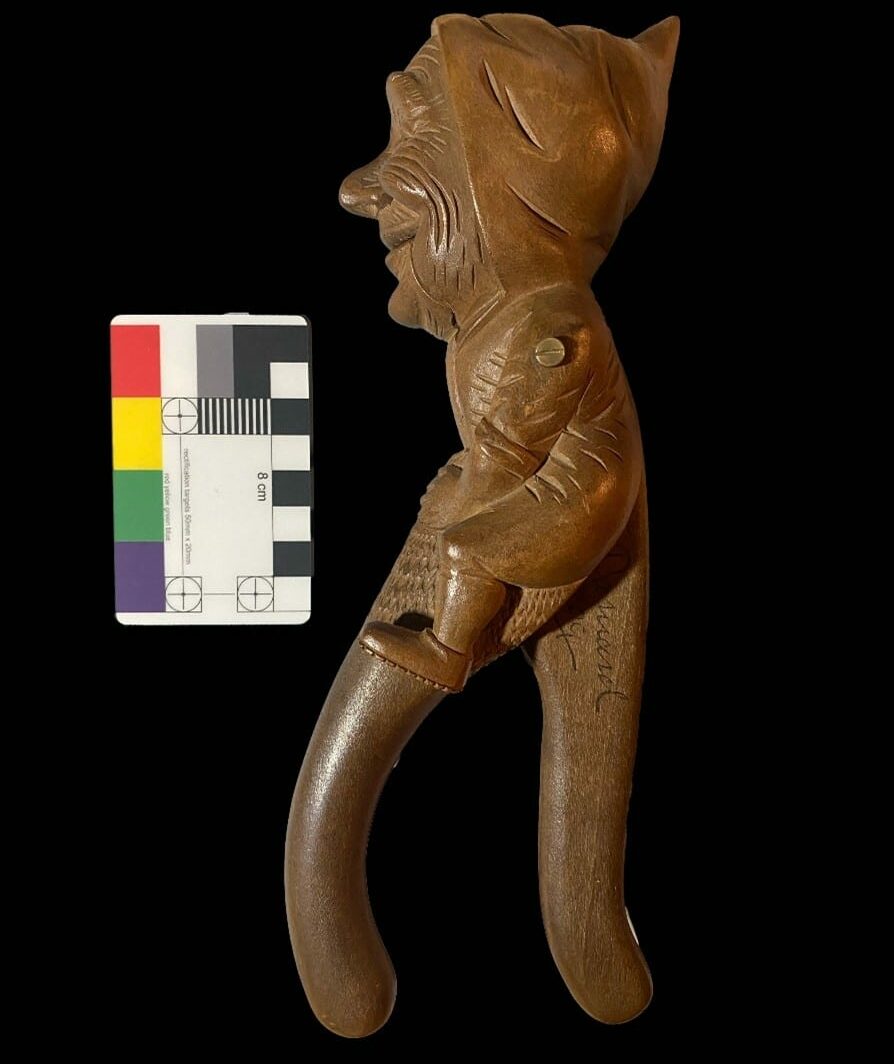
Rebecca, our Collections Intern from Durham University, was busy cataloguing items in the nooks and crannies of the Small Drawing Room, when she made this exciting festive discovery.
Nutcracker dolls originate from late 17th century Germany, and were often given as gifts. This Bavarian nutcracker was from the time of the 9th Lord Barnard, and carries the inscription ‘Lord Barnard, 1909.’ The interesting character was found with a broken jaw, which provided the perfect opportunity for Davina, currently undertaking a Conservation Placement from Durham University, to work her magic.
After cleaning off the years of dust, she used historically sympathetic solvents and adhesives to return the cheeky chap to his original form. Our collections team then photographed and catalogued him for future use, before returning him to the safety of his original storage place.
(collections image for cataloguing)
If you’d like to find out more about our Castle collections visit the blog.
This year we are running a special ticket giveaway to our popular Fireside Stories event for 2023!
To enter all you need to do is:
Visit our Stables Shop between 1st – 24th December 2022
Sign up to the competition with your name and Instagram handle
Make sure you are following our @rabycastleofficial Instagram page for your chance to win
Terms and Conditions
The competition will run from Thursday 1st – 24th December 2022. The winner will be chosen at random once the competition closes and will be announced on Instagram in January 2023. The winner will receive a complimentary ticket for 1 child and 2 adults to a date and time of their choice (subject to availability) for Fireside Stories 2023. Please note, you can only enter once.
The winner will receive priority booking before our newsletter subscribers and the general public and will be able to purchase additional tickets if they have other children up to a maximum of 4 extra child tickets. However, they will not be able to purchase tickets on behalf of other friends and family.
The winner will be contacted by the Raby Castle team by email and must notify Raby Castle of their acceptance of the prize within five working days of notification. In the event of non-response or non-acceptance within the specified time period, Raby Castle reserves the right to reallocate the tickets. Please note, the winner will not be able to book their tickets until summer 2023 when event dates and times have been confirmed.
This competition is open to adults aged 18 and over. The tickets are non-transferable and there is no cash alternative. Travel costs are not permitted in the prize and any expenditure incurred by the winner over and above the prize elements detailed, must be settled by the prize winner.
News
Christmas Pudding Recipe
New festive recipe from Estate Chef, Tom Parry
Christmas is coming and to celebrate we caught up with Estate Chef, Tom to find out how to cook the perfect Christmas Pudding.
Preparation time: 1 hour Cooking time: 4-6 hours Serves: 6-8 Equipment & preparation:You will need 1.5ltr pudding basin, mixing bowl, spoon Allergies: This recipe is vegetarian
Ingredients
100g Self Raising Flour
75g Butter, Softened (additional 20g to butter cooking container)
100g Muscovado Sugar
2 Medium Free-Range Egg
1 Apple (peeled, cored and small dice)
175g Raisins
175g Currants
100g Mixed Peel
40g Fresh Breadcrumbs
40g Mixed Nuts
45ml Brandy
1 Orange (Rind and juice)
1tsp (3g) Mixed Spice
Instructions
Measure the raisins, currants, and apple into a bowl with the orange juice. Add the measured brandy, stir, and leave to marinate for about one hour.
Put the measured butter, sugar and grated orange rind into a large bowl and cream together with a wooden spoon or a hand-held whisk until light and fluffy. Gradually beat in the eggs.
Sift together the flour and mixed spice, then fold into the creamed mixture with the breadcrumbs and the nuts. Add the soaked dried fruits with their soaking liquid and stir well.
Generously butter a 1.4 litre/2½ pint pudding basin. Cut a small disc of foil or baking parchment and press into the base of the basin.
Spoon into the prepared pudding basin and press the mixture down with the back of a spoon. Cover the pudding with a layer of baking parchment paper and foil, both pleated across the middle to allow for expansion.
To boil the pudding, put a metal jam jar lid, or metal pan lid, into the base of a large pan to act as a trivet. Place a long, doubled strip of foil in the pan, between the trivet and the pudding basin, ensuring the ends of the strip reach up and hang over the edges of the pan. This will help you to lift the heavy pudding basin out of the pan of hot water when it has finished cooking.
Lower the pudding onto the trivet and pour in enough boiling water to come halfway up the side of the bowl. Cover with a lid, bring the water back to the boil, then simmer for about seven hours, until the pudding is a glorious deep brown colour, topping up the water as necessary.
When cooked through, remove the pudding from the pan and cool completely. Discard the paper and foil and replace with fresh. Store in a cool, dry place.
To serve, on Christmas Day, reheat in microwave, turn the pudding onto a serving plate. To flame, warm some brandy or rum in a small pan, pour it over the hot pudding and set light to it.
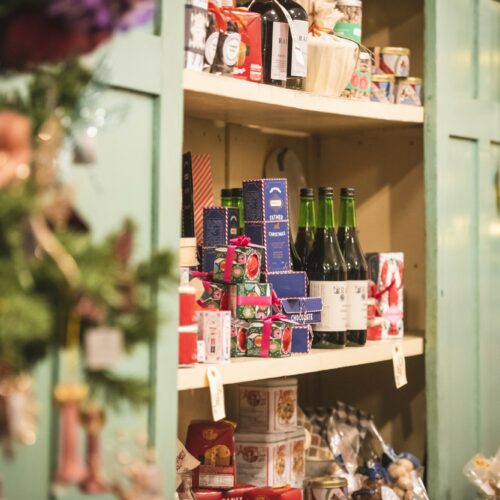
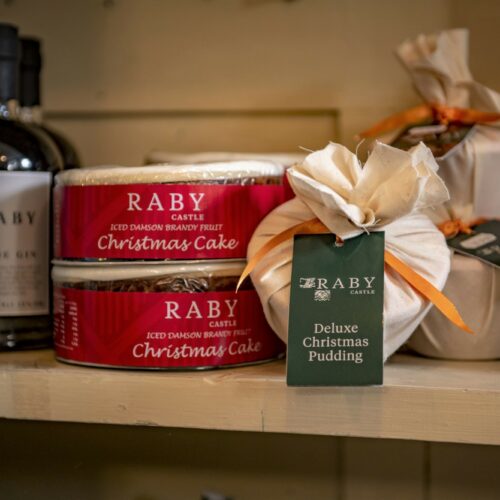
We will be selling our delicious Raby Christmas Puddings in the Stables Shop along with Raby Sloe Gin and Ginger Wine this year. The Shop is open Monday – Sunday from 11am to 4pm.
This week for Historic Houses’ Medieval Monday we are exploring the theme of ‘Ancient Families’. We caught up with Interpretation and Engagement Assistant, Lauren to find out more about the historic Neville family who lived at Raby Castle until 1569.
The Neville Dynasty
‘The end of the House of Neville’
The Nevilles, who in the 14th century developed the castle into what you see today, were in their prime, one of the most powerful families in the North of England. In this month’s Historic Houses blog, we’ll be focusing on an event which brought about the end of the senior line of the Neville family; the Rising of the North.
The male line of the noble house can be traced through Dolfin ‘son of Uhtred’ who was first granted the Manor of Raby in 1131. His grandson, Robert FitzMaldred, married Norman heiress Isabella de Neville, and their son Geoffrey took his mother’s name to capitalise on Norman power at the time. During the Middle Ages, the Neville family had great influence and saw both military and marital success. Robert Neville led English troops at the Battle of Neville’s Cross in 1346. Ralph Neville married Joan Beaufort, sister of King Henry IV, and was created Earl of Westmorland in 1397. His youngest daughter Cecily, known as the ‘Rose of Raby’ or the ‘Mother of Kings’, married Richard the Duke of York in 1429 and found herself at the heart of the Wars of the Roses. Their granddaughter Elizabeth went on to marry King Henry VII. The story of the Rising of the North lands us with Charles Neville, the 6th Earl of Westmorland, born in 1542.
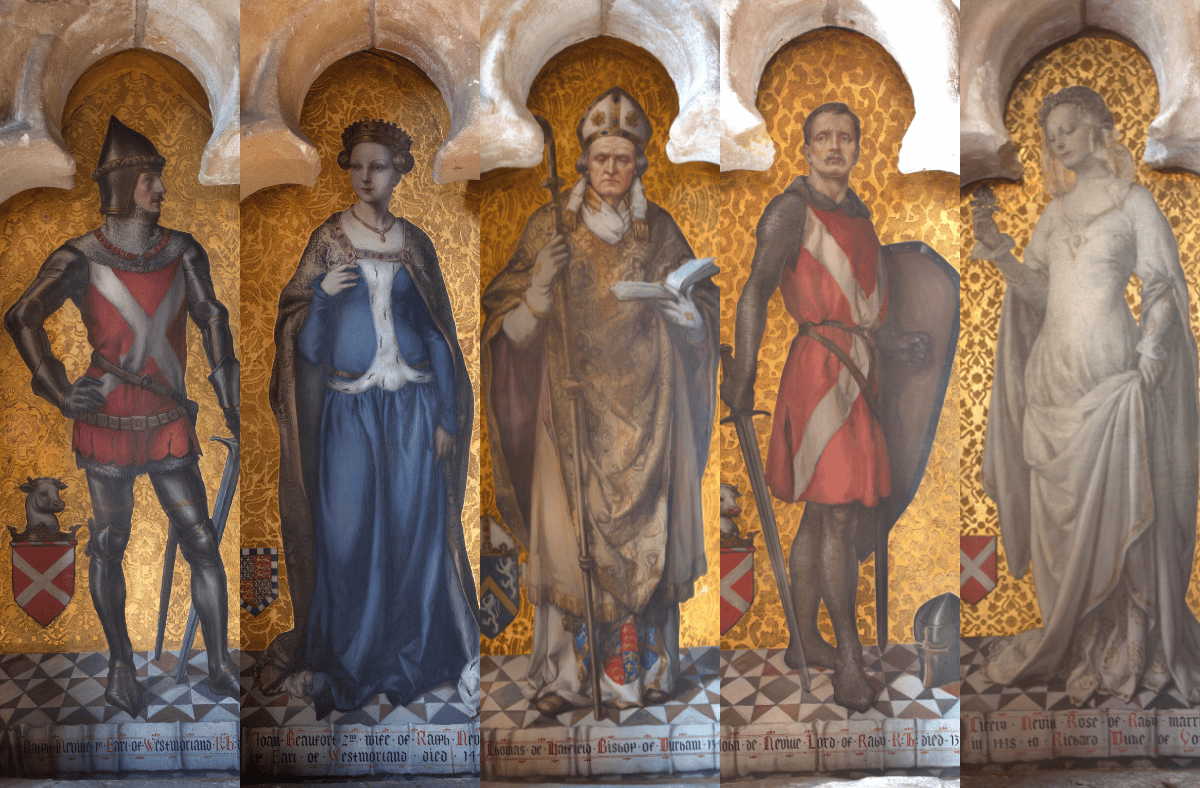
1900s painted effigy to the Nevilles seen in Raby’s Chapel, depicting key figures such as Ralph and Cicely Neville
‘But their glory was drawing to a close…’
The Neville family were devout Roman Catholics, with Charles’ father, the 5th Earl, being a steadfast supporter of Mary Tudor. When Mary’s Protestant half-sister Elizabeth came to the throne, his son Charles, the 6th Earl of Westmorland, was forced to choose between his religion and his monarch. The Northern nobility were greatly attached to the ‘ancient faith’ and resented the changes made during the Reformation. They had also found their regional power weakened by losses suffered in the Wars of the Roses, and by the growing power of central government.
A group of Northern Catholic Lords- including two of Charles Neville’s uncles- resolved to oust the Queen and replace her with her cousin, the Roman Catholic Mary Queen of Scots. Charles Neville and the Earl of Northumberland, Thomas Percy (whose noble families were once enemies), placed themselves at the head of the movement.
In 1569, many meetings were held at Brancepeth and Raby Castle between the rebelling Earls to plot their campaign. 700 Knights were supposedly assembled in Raby Castle’s Baron’s Hall when the decision was made. It is said that while spirits were wavering during the discussions,
‘Lady Westmorland threw herself in their midst, crying bitterly, and spurred them into action with her taunting words.’
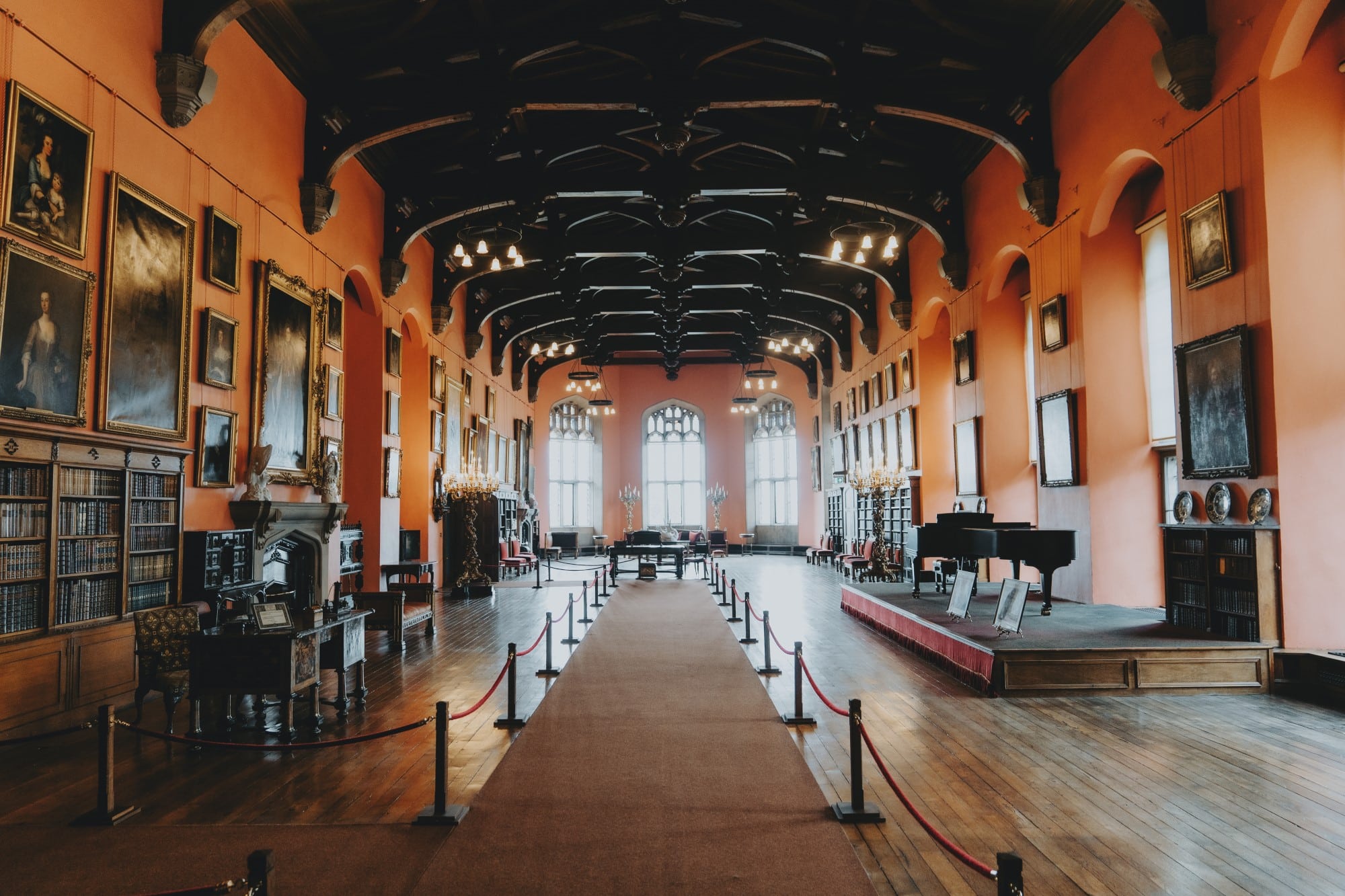
Baron’s Hall as seen today, where 700 knights supposedly assembled to finalise plans for the Rising of the North
Sir George Bowes, a friend of the Earl of Westmorland but also a Protestant, was keeping watch for trouble in the North on behalf of the Queen and reporting back to the Earl of Sussex based in York. He had spies at Raby castle, and learned that retainers and servants were being furnished with armour and weapons before heading for Brancepeth to meet with Thomas Percy. Sussex ordered Bowes to raise his forces at Barnard Castle and be prepared to counter what was now an open rebellion.
The rebels marched on Durham, where they held a Catholic Mass in the Cathedral before continuing south to meet the Queen’s troops headed from York. But the rebellion quickly failed. The Queen issued a Proclamation stating she would pardon the rebels – except for the Earls – if they retreated. Disagreements arose amongst the leaders, and orders were given to return North.
The rebels returned to the Tees where forces divided. The Earl of Northumberland went back to his castle at Alnwick, while the Earl of Westmorland decided to attack George Bowes at Barnard Castle. This resulted in another failure for Charles, as after a siege of 11 days, Bowes’ forces were reinforced by the Queen’s men travelling up from the South. The Earl of Westmorland retreated with his cavalry to Hexham, where they scattered into Scotland. News of the approaching Royal forces reached Raby, where Neville documents were gathered and taken away.
Neville’s Gateway, depicting the Neville coat of arms. We have very little evidence left from the time of the Nevilles as a result of the rebellion.
‘The fatal Rising of the North that cost them all so dear…’
The Earl of Northumberland was captured and executed, and Charles Neville fled to the Netherlands where he died in poverty 32 years later in 1601. Having left no male heir, the senior Neville line was ended. Back in England, he was convicted of High Treason, and as a result his title ‘Earl of Westmorland’ became extinct and Raby Castle and its’ estate fell into possession of the crown.
But what of Raby Castle? In 1616, Raby and Barnard Castle were granted to notable politician Sir Henry Vane the Elder. The Vane family’s purchase paved the way for the developments you see today, but not without some quarrels, wars and treasonous acts of their own…
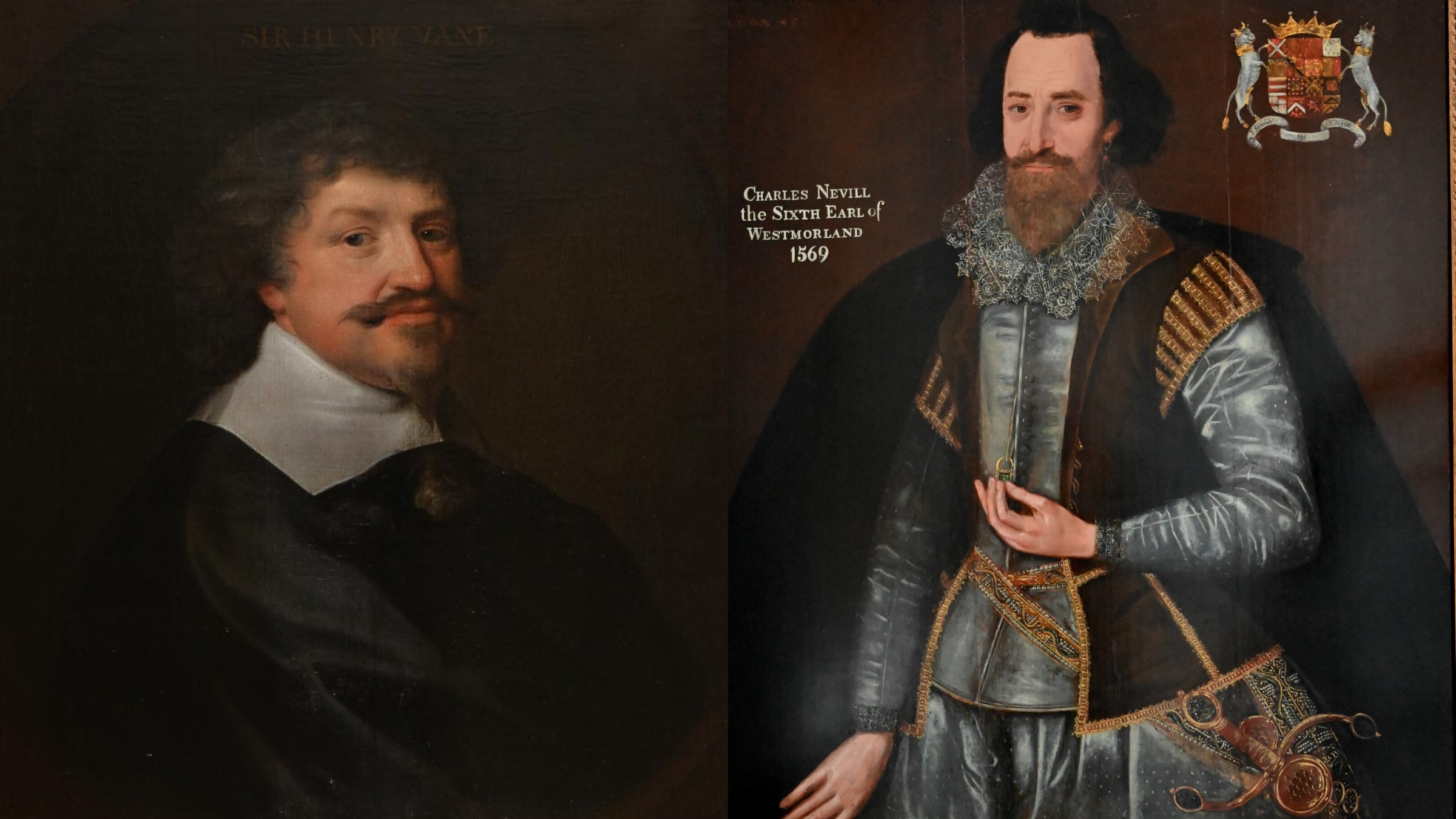
Left: Sir Henry Vane the Elder, head of the Vane family who next owned Raby castle. Interestingly, more recent members of the Vane family married descendants of the Nevilles, connecting the two lines of Raby castle owners.
Right: A portrait of Charles Neville painted a year after his death in 1602. This is the earliest portrait we have of one of Raby’s owners.
Raby Castle is now closed for the winter period, but you can still visit our impressive parkland, shop and café until we reopen in March 2023.
News
Grade one listed Gainford Hall removed from Historic England at Risk Register – Raby Estates
Grade one listed Gainford Hall removed from Historic England at Risk Register
Grade one listed Gainford Hall has been successfully removed from the Historic England Heritage at Risk Register following restoration works by Raby Estates.
This important step in The Rising, the five-year Raby Estates redevelopment plan, marks a turning point, as Raby delivers on its first promise to the local community to restore and renovate several historic buildings, preserving them for future generations.
Gainford Hall is a Jacobean mansion, built during the closing years of Elizabeth I’s reign, for John Cradock, Vicar of Gainford. This iconic building of the Renaissance period retains many of its original features, including a full height porch, split-level interior, original fireplaces, central chimney stack and plasterwork. Its layout, just two rooms deep, was considered cutting-edge for its day and is possibly the earliest house of its kind in northern England.
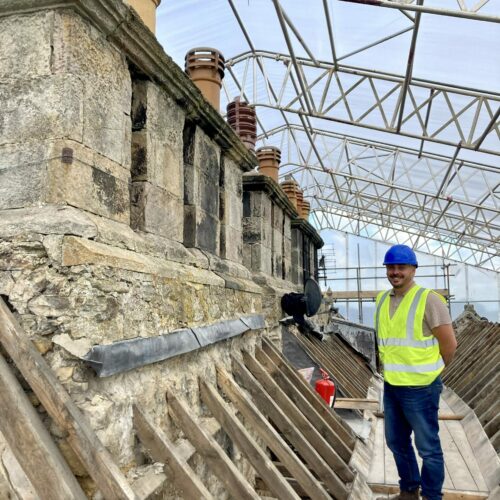
The extensive works included installation of steel ties to the main walls and roof timbers, re-roofing, rebuilding and repairing the chimneys, the complete repointing of external walls and the installation of new lead windows. The interior of the Hall is also being restored and refurbished, maintaining its original features, whilst bringing the Hall into the 21st century.
The project was overseen by Raby buildings manager Phillip Dent, as well as maintenance manager Michael Bennett, with consultation from historical building architects Donald Insall. Where possible, local contractors have been employed to undertake the crucial work.
Raby Estate’s CEO, Duncan Peake said of the news: “We are extremely pleased to see that Gainford Hall has now been removed from the Historic England Heritage at Risk Register. It was our primary aim to restore this extremely important building to its former glory, preserving it for future generations.
“Our project was the first in a series of significant improvements across the Estate, which are helping stimulate local economic regeneration and create jobs, as well as securing the future of some of County Durham’s most iconic properties.”
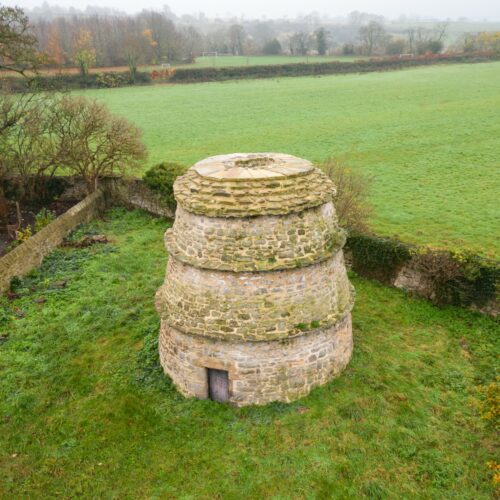
In addition to Gainford Hall, the Dovecote, which sits within the boundary of the Hall, has also been fully renovated during the works, ensuring its removal from the Heritage at Risk Register as well.
“We are extremely pleased with this outcome”, says Philip Dent. “Both Gainford Hall and the Dovecote are important local buildings from a bygone age that now have their place in the modern world. We look forward to welcoming the new tenants once interior works are completed early next year.”
The restoration of Gainford Hall was funded by the release of land owned by Raby Estate to build high quality residential housing in Gainford and Staindrop, contributing to the county’s housing requirements.
Gainford Hall, a residential property, is now being marketed for tenancy by Savills, including several modernised outbuildings and adjacent land. The restoration is due to be completed by February 2023. For further details, please visit https://search.savills.com/property-detail/uk006537841
We’ve got an abundance of apples and eggs on the estate this year, so to celebrate we caught up with Tom to find out a new autumn recipe that you can try at home.
Preparation time: 30 mins Cooking time: 1 Hour Makes: 10 Cake slices Oven Temperature: 180C/160C fan
Ingredients
250g Orchard Bramley Apples (peeled and sliced)
50g Light brown sugar
1 Rub together the sugar, flour and butter until the mixture resembles bread crumbs.
Cake Mix
Peel and core the apples and slice into 2cm pieces.
Place the apples into a bowl and add 50g brown sugar Roll the apples making sure all are covered with sugar and leave to one side for later.
Place butter and sugar into a mixing bowl and whisk until light and fluffy.
Add eggs, flour, cinnamon, and vanilla, on a low speed lightly mix until smooth.
Using a spatula, fold in the apples.
Pour mix into a lined baking tin.
Sprinkle all the crumble mix evenly across the top of the sponge mix.
Bake in a pre-heated oven for 50-60 minutes, it may take a little less depending on your oven.
Leave the cake to cool in the tin for 10-15 minutes, then transfer to cooling rack to cool completely.
If you’d like to try these delicious traybakes, made with locally grown produce on the Raby Estate, come and visit us in the Yurt Cafe at Raby Castle. The Yurt is open daily from 10am – 4pm.
Historical Elements Discovered in Local Listed Building
Hilton Hall
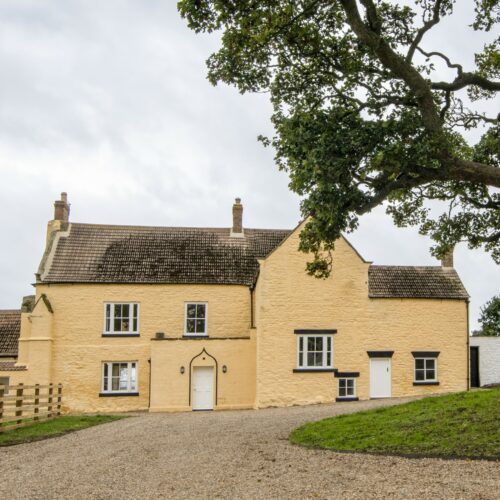
Historical features that have been covered up for decades have been found in a Grade II* listed building in County Durham.
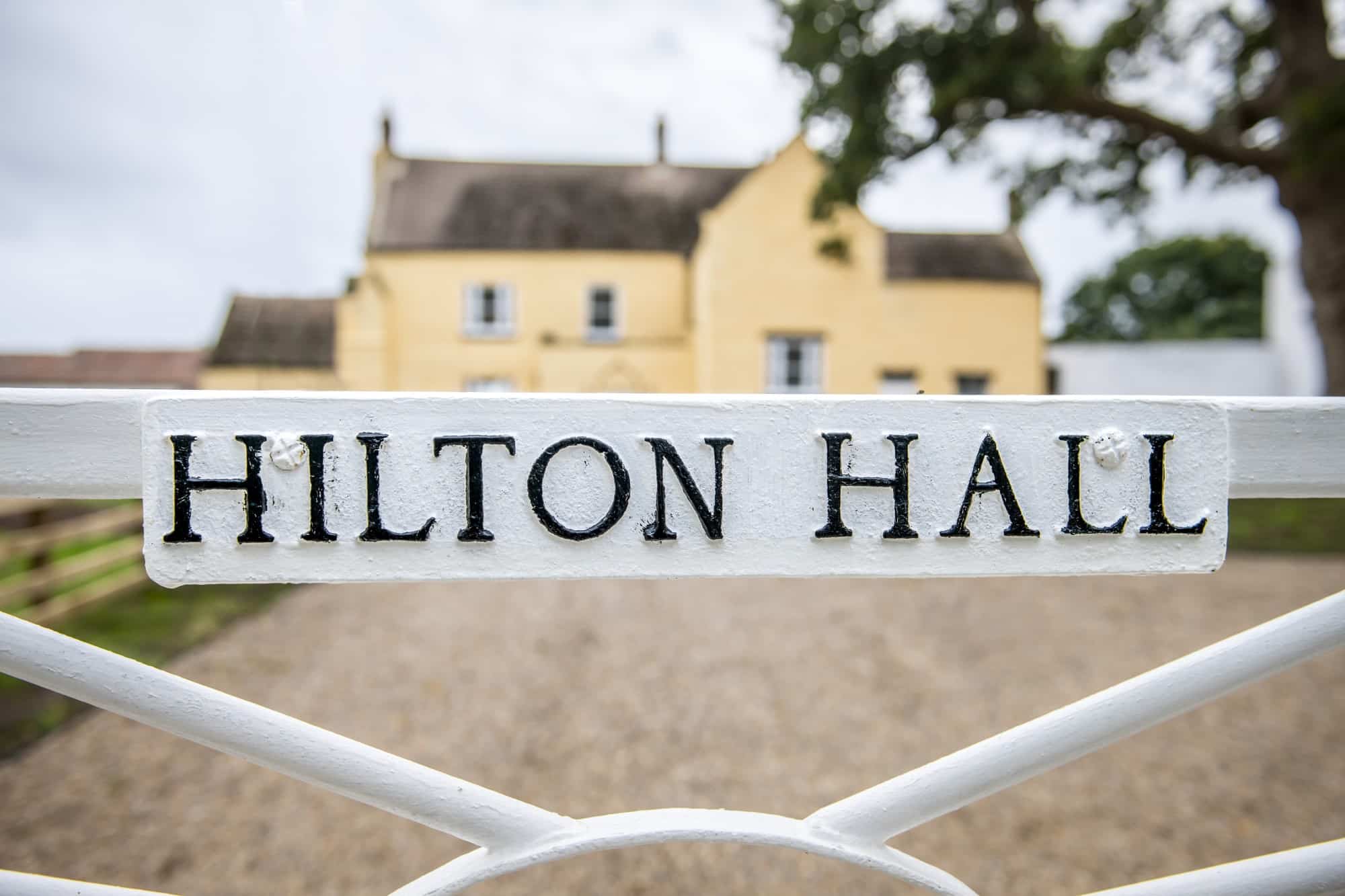
Hilton Hall, a two-storey building with medieval origins located in the hamlet of Hilton, is on the national list of historic and architecturally important buildings.
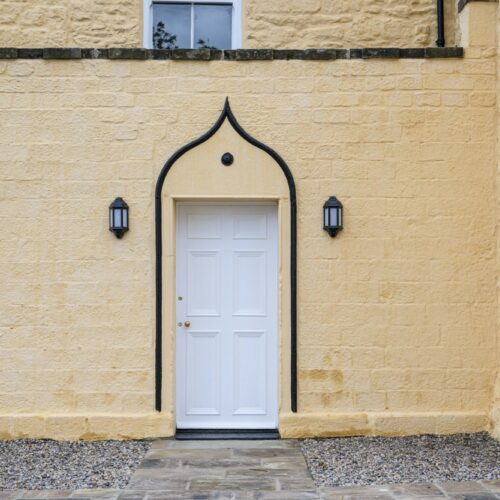
During significant restoration of the building, historic elements of the former chapel of St Catherine, a chantry to Staindrop Church, have been uncovered and the team has worked closely with Durham County Council and Historic England to retain these historical features.
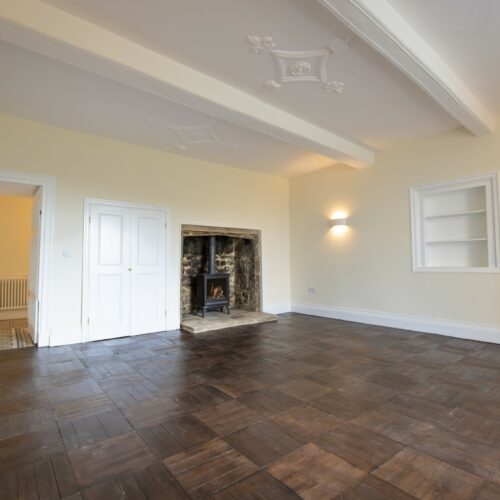
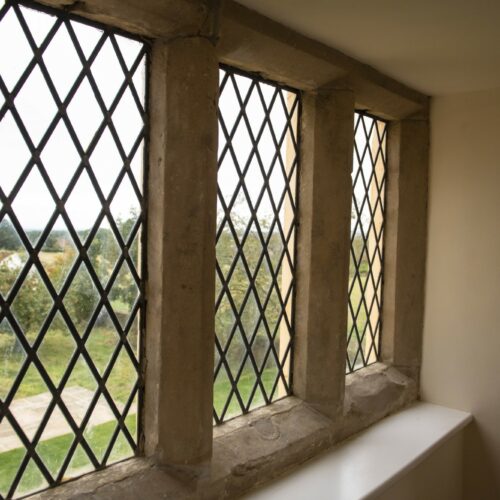
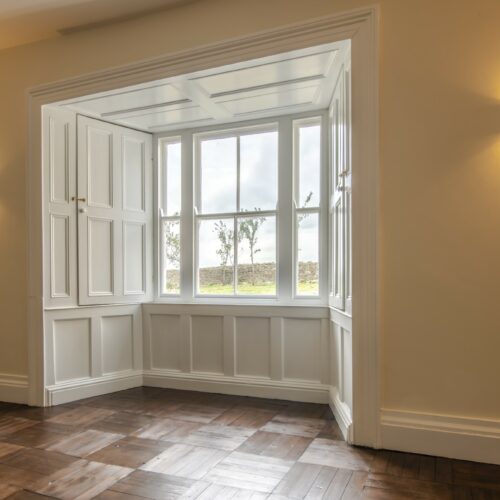
Several recesses in the formal sitting room have been carefully restored and leaded windows – which had been covered over to create storage areas within the Hall – have been revealed and preserved using traditional materials and methods.
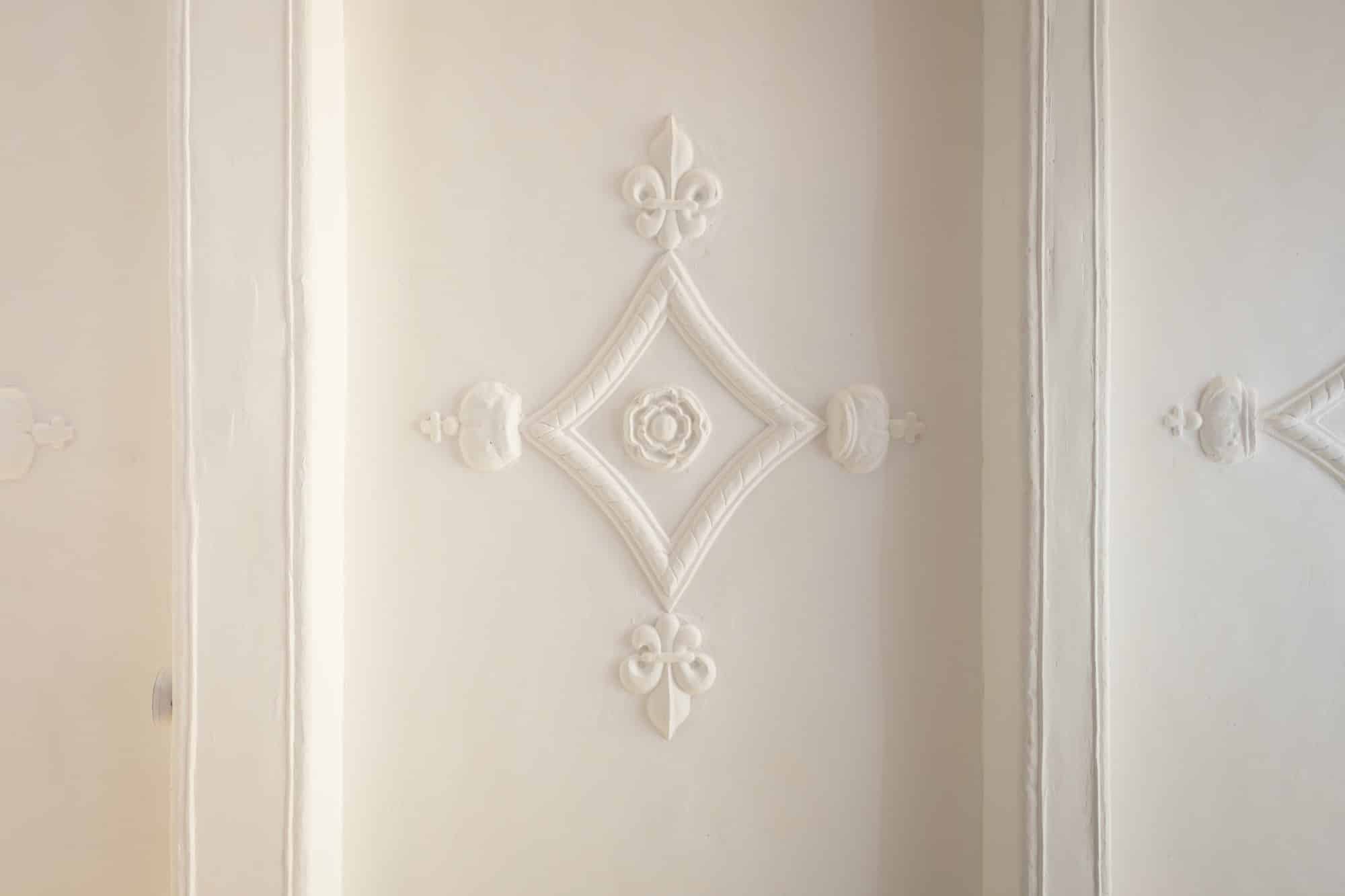
Intricate ceiling mouldings, which had been painted over and lost their unique features or had been damaged beyond repair, have also been brought back to their original design using specialist methods or replacement plaster mouldings created by the buildings team.
Philip Dent, buildings manager at Raby said:
“We knew there were heritage features in this special building however to find even more has been a pleasant surprise – and adds even further to the historical importance of Hilton Hall.
“We always make sure our restoration projects throughout the estate retain the buildings’ legacies, whilst restoring them back to their former glory.”
The work at Hilton Hall – which is thought to have originally been the chapel of St. Catherine before its conversion and adaptation to residential use – has been undertaken to make the building fit for habitable use.
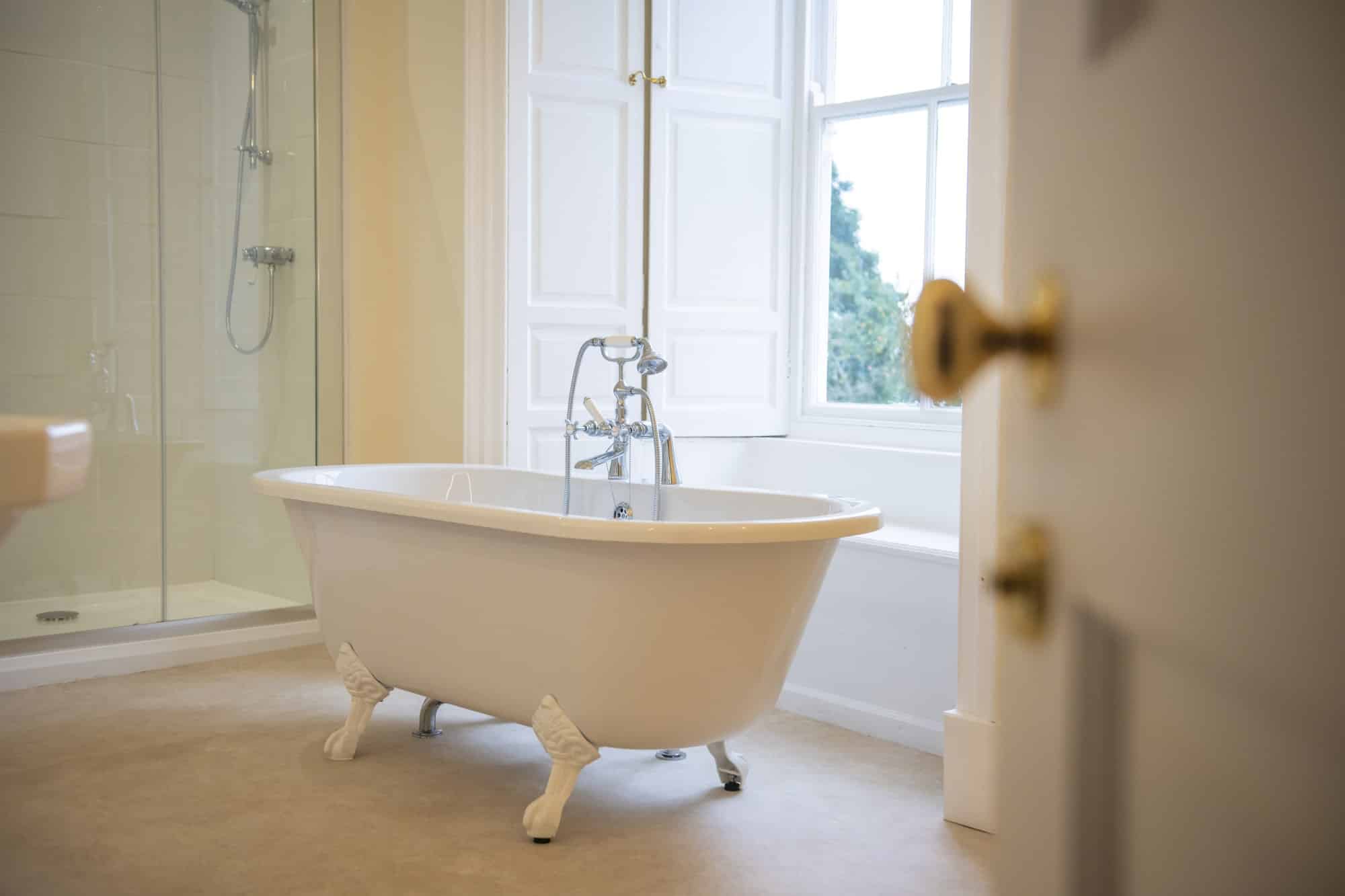
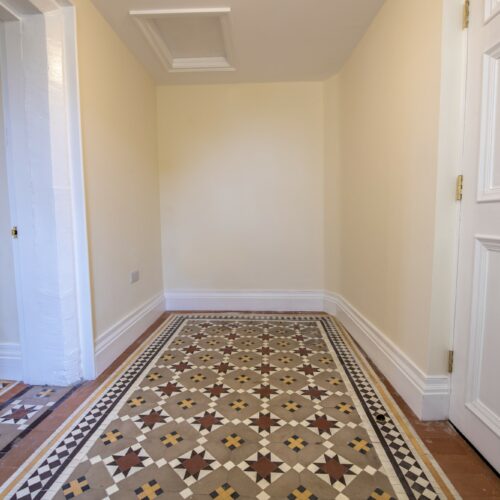
The most significant change is to the first floor with the addition of bathrooms, and elsewhere the changes have created improved spaces for modern living, whilst retaining the historic fabric and therefore special interest of the building.
Philip Dent continued:
“It is at least 60 years since this building has had any significant investment and our buildings team have worked hard to update the existing facilities within the house with a future tenant in mind.
“Our team consists of highly skilled individuals – many of whom started with us as apprentices – who have been trained during their time here at Raby in highly traditional methods due to the heritage buildings that can be found on the estate, including Raby Castle itself.
“We use processes that have been in existence for over 100 years but with modern equipment, and it’s reassuring that traditional skills development and training on the estate will help to preserve important heritage buildings like Hilton Hall, Unthank and Gainford Hall throughout County Durham.”
Other historical elements that have been carefully repaired in Hilton Hall include the existing historic decorative ceiling moulding in the bathroom and the removal of a cupboard in the fourth bedroom to reveal the existing stone mullioned window behind.
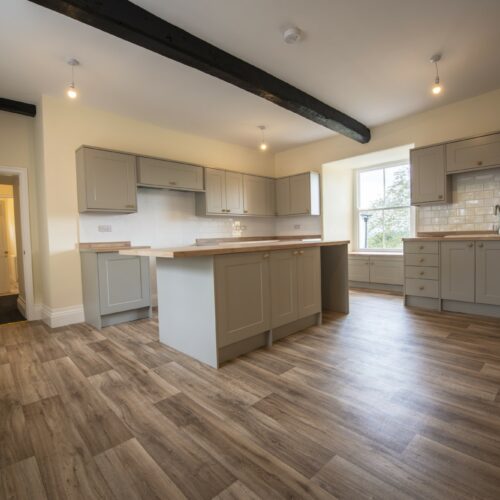
Once finished, Hilton Hall will comprise of four bedrooms with two en-suites, a large kitchen and a living room with original decorative features and will become part of Raby Estates’ let residential portfolio.
Raby Estate hosted an open day at Hilton Hall on Thursday 6th October for local visitors to view the transformation of this historic property, which will soon be available as a residential let.
For more information about Raby Estate’s projects and the buildings team, visit our development page.
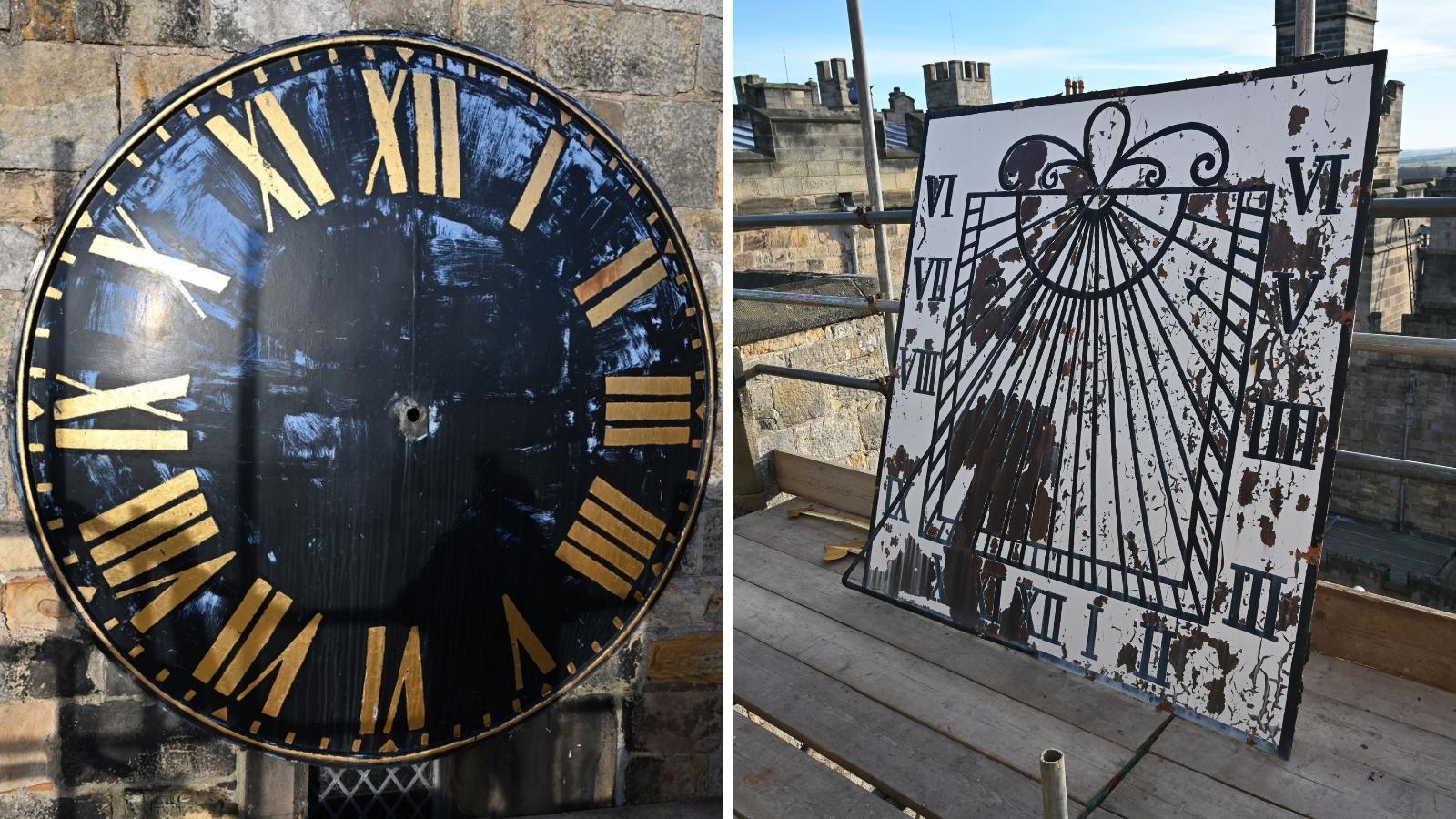
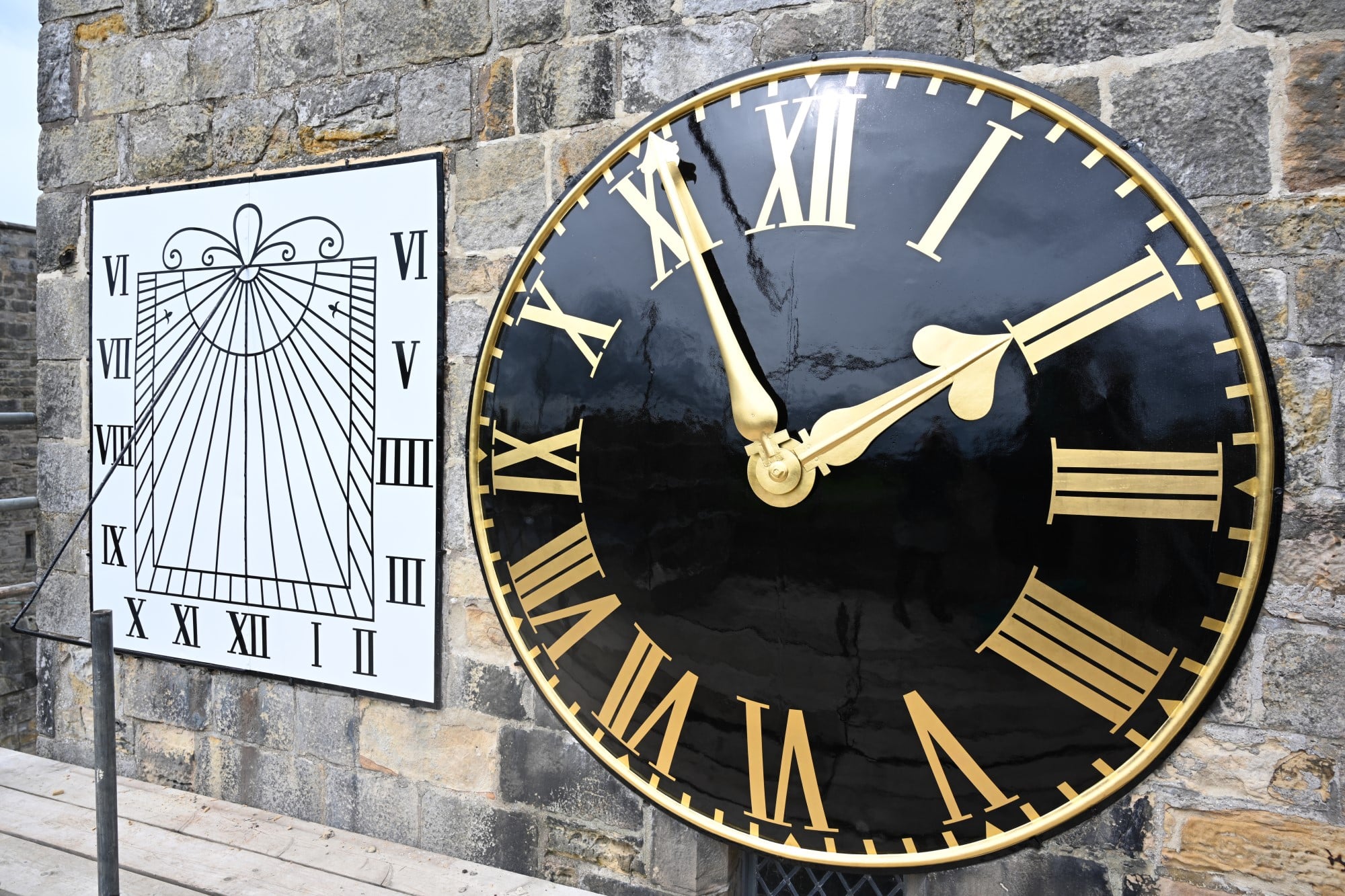
Eagle eyed visitors to Raby Castle in the early months of 2022 will have noticed that The Keep tower had been clad in scaffolding. Thanks to a grant from Historic England and Historic House Foundation, we have been able to carry out some much-needed roof repairs and conservation work on The Keep’s distinctive clock and sundial faces. We caught up with Castle Curator, Julie Biddlecombe-Brown to find out more.
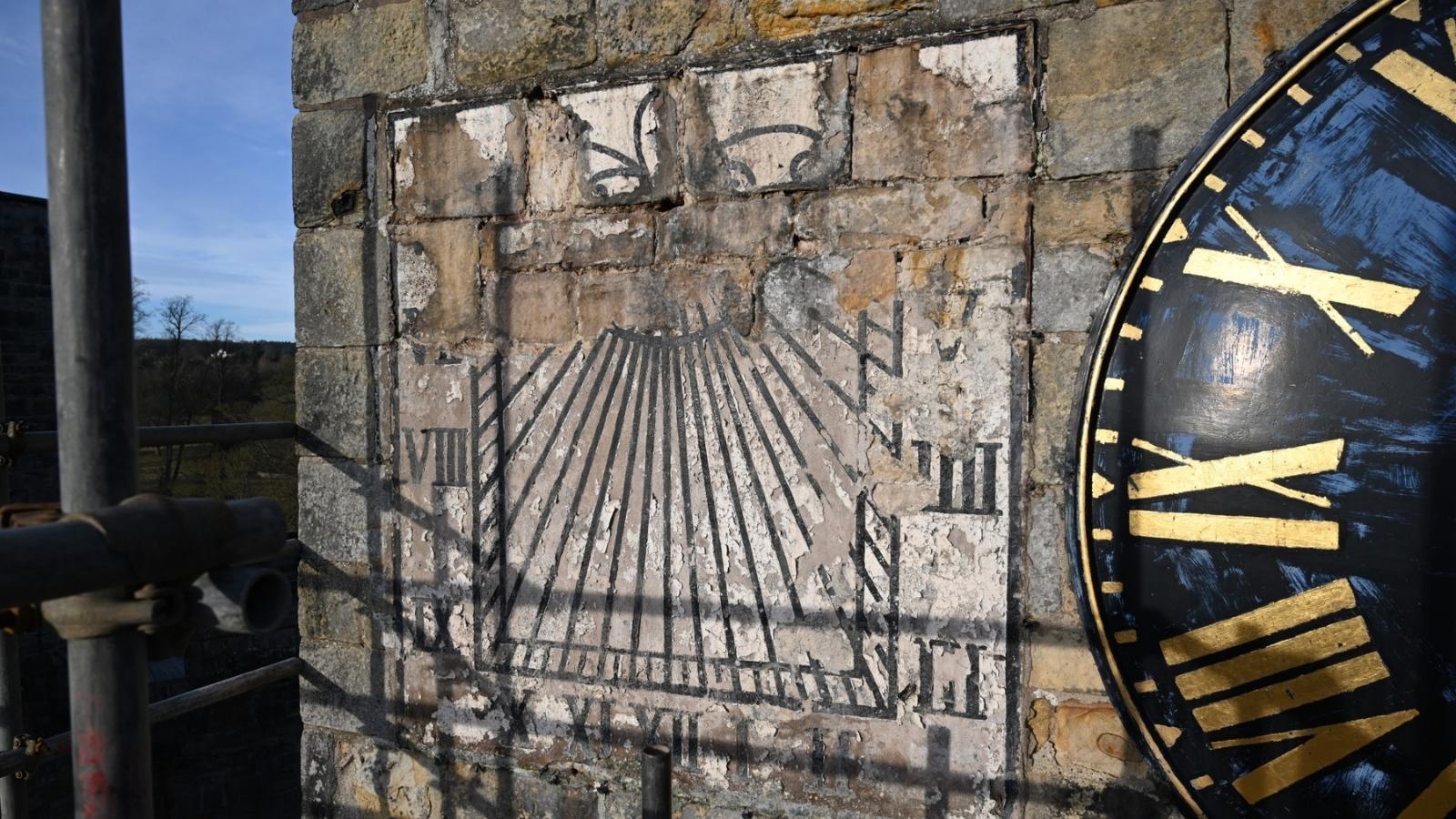
The work provided a perfect opportunity for us to delve into the history of these important time-pieces. In the days before mechanical clocks, fixed and portable sundials were the commonest means of telling the time. The earliest surviving sundial that the castle team were aware of was the metal dial fixed to The Keep wall… or so we thought. When the metal sundial was removed to travel to specialist conservators Smith of Derby, a second dial was revealed, painted directly onto the castle wall. Paint analysis and research is currently being carried out on this surprising discovery.
Clock and sundial before conservation works
Second sundial revealed
The two dials of the castle clock were also sent for conservation and re-gilding. Paintings dating from the late 18th century show the clock facing out from Bulmer’s Tower, only really visible from the Park. The clock was probably moved to The Keep tower in the 1840s where it could be seen more easily by the family, their guests and staff.
This move would have coincided with the standardisation of British time as a result of the growth of the railways, where ‘local time’ measured on sundials by the position of the sun in the sky, was too unreliable for tight railway timetables. It has remained there ever since as the lovely watercolour from Raby Castle’s 1903 visitors book shows. Our research on the clock and sundials continues and we will
share our discoveries in a special Raby Castle blog later on in the year now that these important time-pieces are back in situ.
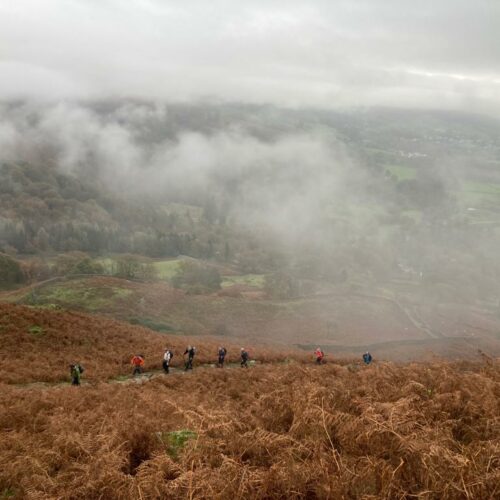
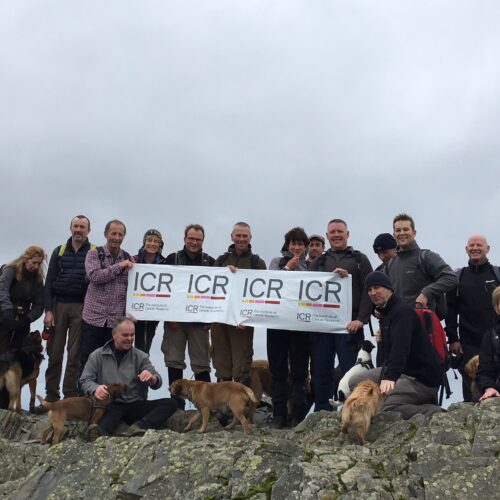
Once again a team of intrepid hikers from Raby Estates will be raising money for the Institute of Cancer Research by participating in a “Human Mountain Endeavour” on the Lakeland fells on Friday 4th November 2022.
One third of us will be touched by cancer in our lifetime. The Institute of Cancer Research (ICR) is an academic working body based at the Royal Marsden Hospital. ICR employs over 300 scientists and has taken more drugs into clinical trials in the last decade than any other organisation worldwide. We are therefore proud to be supporting such a worthy cause again.
This annual event involves teams from businesses located across the north of England ascending Lakeland’s highest mountains in early winter conditions. The event has raised more than £1.75 million for the Institute and other charities over the past 34 years. With your help we would like to make this another record-breaking year.
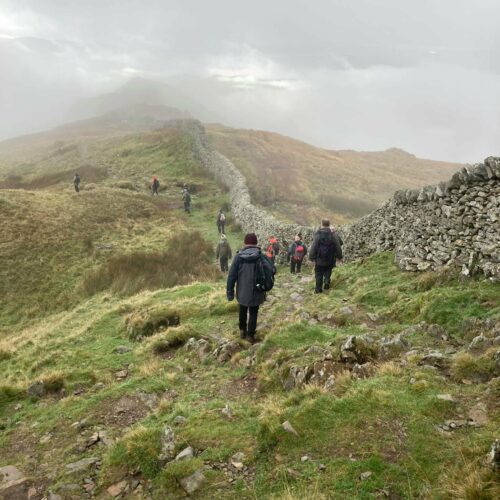
This year the Raby Estates Team will be tackling the fells around High Street in the north east of the National Park. Our route will begin at Hartsop, ascending High Street via Stoney Cove Pike and Thornthwaite Crag before returning over The Knot and descending to Hayeswater and Hartsop. It’ll be a long day in the hills.
If you would like to support our team with their fundraising for Climb of Life, and the motivation to complete this arduous challenge, then please go to their JustGiving page to donate.
Sign up to the Raby Newsletter
Sign up to our newsletter today to receive weekly updates, exclusive offers and priority booking on our seasonal events.
"*" indicates required fields
Acres of agricultural land, vast woodland, heritage landscapes and unique buildings all steeped in a rich history FIND OUT MORE ABOUT RABY