
Raby

The Twelve Days of Christmas have been celebrated since medieval times. In the 14th century when Raby Castle was built, the Twelve Days began on Christmas Day itself, celebrating the birth of Christ, then would carry on until Twelfth Night on 5th January – a huge celebration involving feasting, drinking and merrymaking which heralded the end of winter. Taking our inspiration from the 18th century song, the Twelve Days of Christmas, we challenged the castle team to find a link with each of the gifts given over the 12-day period. Our daily celebration will provide a light-hearted glimpse of the stories of the people who have lived and worked at Raby Castle over the centuries.

A Partridge in a Pear Tree
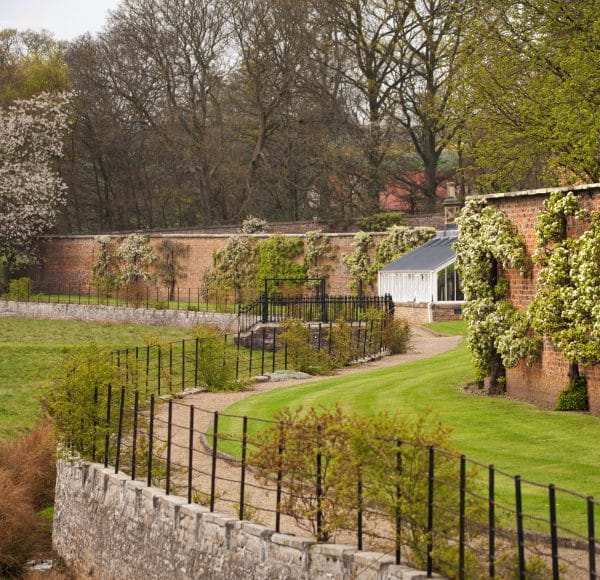
On our first of the Twelve days of Christmas, we celebrate the gardens. Although we have not managed to photograph a partridge in our pear trees, our gardens team take great pride in the historic Raby fruit trees. Pictured here in autumn 2020 our espalier pear trees, planted on a sunny south facing wall at the bottom of the walled garden.

Raby has a long tradition of fruit growing and in the temperamental climate of the north-east, some surprising fruits have been grown. Pears and apples might be expected, and other historic fruit trees and bushes still thrive including the Raby redcurrant created by the Head Gardener in the 19th century, and a white Ischia fig, brought to Raby from Italy by William Harry Lord Barnard (later the 3rd Earl of Darlington), which can still be seen in its purpose-built fig house, just along from the pears.

Figs were not the only exotic fruit grown at Raby and heated walls and specialist structures have seen crops of peaches, grapes and even pineapples grown successfully.

The Raby gardens have a fascinating history  of their own. During the pandemic they have been a haven for so many visitors and when we were unable to open the castle, became a place of safe participation in events as varied as open-air cinema, yoga and a Halloween trail. The gardens are so well-loved that in 2021 we will be launching a new Garden Tour looking at the history, planting and future of this much-loved space. Sign up to our mailing list to be the first to hear when the tour is launched.

Two Turtle Doves
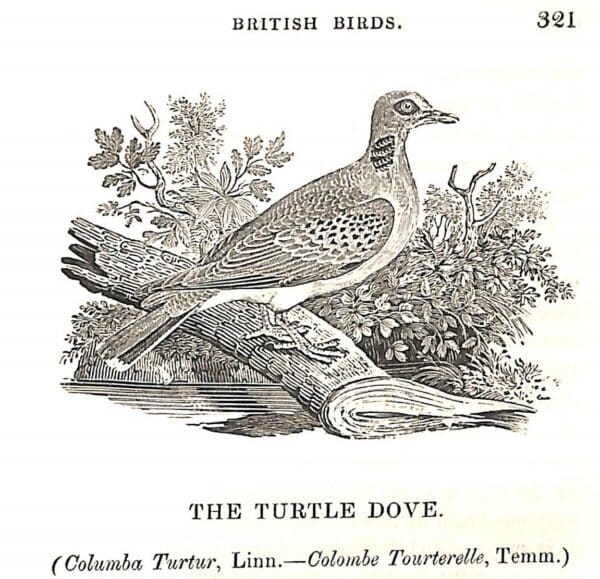
 

According to Thomas Bewick, author of A History of British Birds, first published in 1797 …

The note of the Turtle Dove is singularly tender and plaintive: in addressing his mate, the male makes use of a variety of winning attitudes, cooing at the same time in the most gentle and soothing accents; on which account this bird has been represented in all ages as the most perfect emblem of connubial attachment and constancy”.

With such symbolism, what better gift could a true-love bring on the second day of Christmas?

The library at Raby Castle has copies of both volumes of Bewick’s work on British Birds and his earlier work on a History of Quadrupeds.  Born in 1753 in Northumberland, Bewick was a tearaway child who frequently played truant from school, preferring to spend his time in the great-outdoors and in observing and drawing wildlife. He trained as an engraver, temporarily leaving the north-east to seek his fortune in London but was soon drawn back to his childhood home, Cherryburn, now owned by the National Trust.

At a time when engraving on copper plates was more common, Bewick preferred to work on wooden blocks – pushing the boundaries of wood engraving to their very limits. His intricate, life-like prints include the full range of British birds, interspersed with bizarre scenes as varied as a child blowing soap bubbles from a clay pipe to a convict wrestling with a demon en-route to the gallows!

But birds were clearly his passion. In the introduction to Volume 1 of a History of British Birds, he writes ….  “In no part of the animal creation are the wisdom, the goodness, and the bounty of Providence displayed in a more lively manner, than in the structure, formation, and various endowments of the feathered tribes”.

Three French Hens
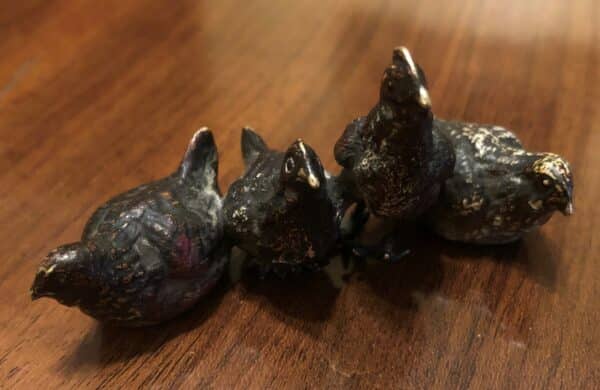
Today our glimpse of the Raby Collections is of a tiny brass model of three hens and a cockerel. Rather than of French origin, they are believed to have been made in Germany at some time before 1883. The only clue to manufacture being a little stamp reading “Geschutz” on the base – meaning ‘protected’ – a 19th century copyright system used in Austria and Germany.

Our three German hens (and a cockerel) are kept in the Duke’s Study at Raby Castle which can be visited on our ‘Behind the Scenes Tours’.

The study was last used by the 10th Lord Barnard and closed up when he died in 1964 . It has remained a time capsule ever since.  The little model was possibly a souvenir, collected by earlier generations. In the 1870s and 1880s the 4th Duke and Duchess of Cleveland were known to have regularly visited Germany, enjoying the historic cities and taking health cures in spa towns in the company of German nobles such as the Prince de Schwartzenberg, the Queen of Saxony and the Prince and Princess Bismarck who also visited them at Raby Castle.

The Duke’s correspondence and memoirs were transcribed by the Duchess after his death and chart these and other journeys. The couple were clearly enthusiastic travellers and describe every aspect of their travels, from the landscapes they travelled through to the conversations they had with the people they met. German crafts and toys clearly made an impression on the Duke as he mentioned them in his writing. This tiny model – which he seems to have used as a paperweight – is one of a number of  items dating from the 19th century that were made in Germany  – perhaps a small reminder of their travels when the couple returned home.

Four Colly (or Calling) Birds
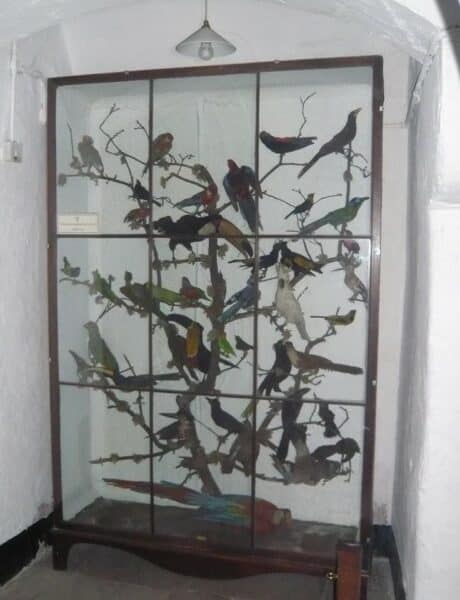
Today often written as ‘Calling birds’, early versions of the Twelve Days of Christmas list this gift as four ‘Colly Birds’ – a Colly Bird being a bird as black as coal – our blackbird.

In the 19th century, many wealthy collectors embracing new scientific research actively sought to acquire and display natural history specimens from the UK and further afield.

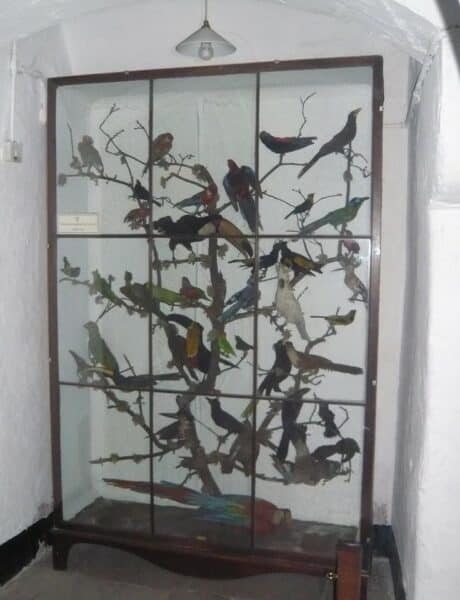
Raby was no exception and traces of these animal collections still survive at Raby Castle, including a case displaying a variety of birds of many colours – black birds included. Many of these specimens were believed to be collected by Elizabeth, 1st Duchess of Cleveland  (1777-1861).

This summer, student Dorothea Fox from Durham University carried out an internship at Raby during which she researched Elizabeth’s ‘Museum of Natural History’.

Here she summarises her findings in her blog Whatever Happened to Raby’s ‘Museum of Natural History’? So, on this fourth day of Christmas, why not settle back with a cup of tea and a mince pie and discover more about this fascinating aspect of Raby’s past.

Five Gold Rings
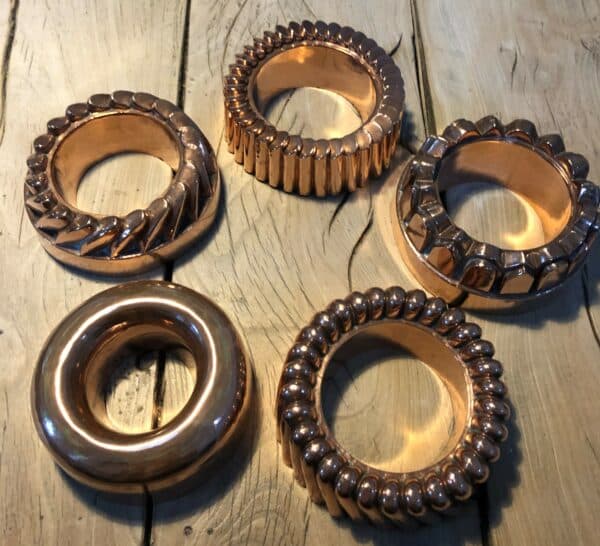
Of course these glittering rings are copper, rather than gold, but they form part of Raby Castle’s pre-eminent  – and therefore gold-star collection of furnishings and furniture in the medieval kitchen. Built in the 14th century and remaining in use until the 1950s the kitchen remains a firm favourite part of any visit to the castle.

Part of the appeal of the kitchen lies in the array of gleaming copper pots, pans, urns and especially our collection of moulds of all shapes and sizes.

Foods set in a mould have been popular culinary showpieces from the medieval period onwards, evolving over the centuries to include dishes, from jellies and  mousses to ice-cream and blancmanges. Often highly elaborate, these decorative delicacies could be sweet or savoury.

A handwritten recipe book in the Raby collection dating from the 1780s shows that variety of uses such moulds could be put to ….  “Oysters in a Green Mould” used veal, spinach juice and oysters set with gelatine, “A Newmarket Pudding” set lemons and cherries with breadcrumbs, eggs and sugar, and the book contains several recipes for “Iceland Moss Jelly”; a fortifying food for invalids considered especially suitable for anyone suffering from a sore throat or bronchitis.

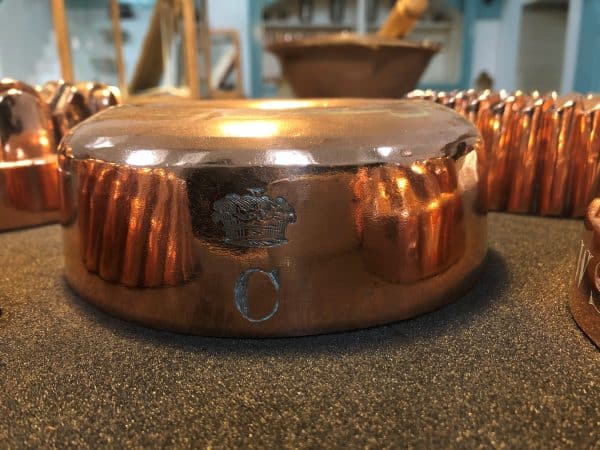
The shapes of the moulds vary, from ornate castles with turrets and towers, to tiny individual flowers, and of course the variety of decorative ring moulds. Many of the moulds are marked with the stamp of the maker and also a mark denoting the owner – here seen as the C for the Cleveland under Ducal Coronet – a reminder that during this period Raby Castle was owed by the Duke of Cleveland whose cook might well take their own kitchenware when they travelled to other houses.
Cleaning the copper at Raby is an annual task embraced with gusto by our volunteer team. The annual cleaning takes place just before the castle opens for the season and is traditionally an opportunity to catch up as a team and enjoy one another’s company.

For many during 2020, volunteering was impossible and as we move towards 2021 we take the opportunity to wish all of our volunteers a happy, safe and healthy year.

Whilst the Covid restrictions may mean that the annual copper clean for 2021 has to be very different, we look forward to presenting visitors with the much-loved view of a gleaming historic kitchen.

Six Geese A Laying
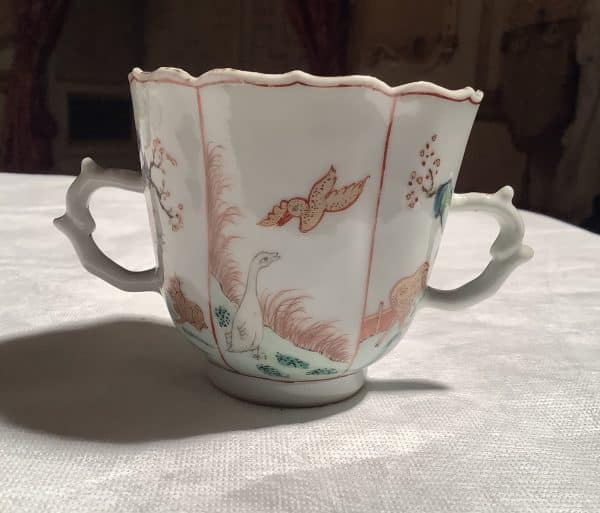
Tucked away in one of the porcelain display cabinets at Raby are a pair of charming little double-handled beakers. One of which depicts a variety of birds and animals in a stylised landscape including a simple but rather sweet depiction of a goose.

During summer 2020 four postgraduate students from the School of Museum Studies at Leicester University carried out a ‘virtual’ research placement at Raby Castle, helping us to better understand our Chinese and Japanese ceramics. This little cup was studied by budding curator Manle Li s as part of this project and her conclusions were fascinating. After studying the painting and the shape of the cup (and particularly the handles) in detail, Manle concluded that it was in fact a European example and that the birds and animals weren’t quite a match for the Chinese painting style. Her online research led to other examples of 18th century two handled cups of the Chinese style in collections of the British Museum and the V&A which were the same, distinct shape.

Raby Castle enjoys regularly hosting student placements and even during the challenges of 2020 found a way to continue this tradition virtually. Placements provide an opportunity for focused research into collections that have been given limited attention in the past. We would like to take this opportunity to thank ALL of the students that worked with us in 2020 and look forward to working with the next cohort in 2021.

Seven Swans a Swimming
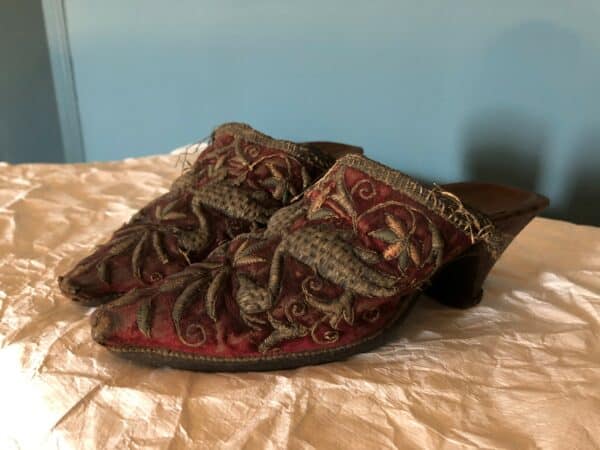
It takes a bit of searching to see how these fine slip-on ladies’ mules relate to the gift given on the seventh day of Christmas …. Although to the wearer it would have been perfectly clear.

Viewed from above, each of these embroidered red velvet mules depicts (not seven, but..) two Swans a Swimming.
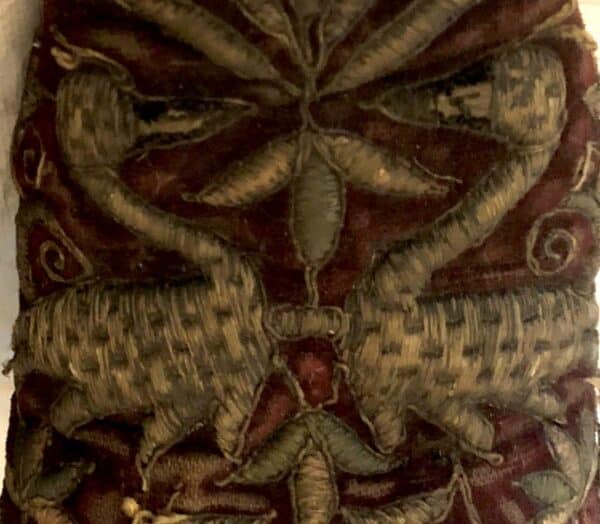
Swans have held deep and symbolic meaning in England since Roman times; featuring in classical myth and legend, fairy tales and folklore. The shape formed by the necks of two swans facing one another can be seen to form a heart and swans have come to symbolise love, strength and loyalty…. A perfect token to be sent by a true love.

These exquisite shoes were made in around 1670. The swans and other motifs were embroidered on to red velvet. We don’t know who they belonged to, but in the 1670s the castle had been owned for around 50 years by the Vane family. Perhaps it isn’t too great a flight of fancy to speculate that one possible contender was Elizabeth Holles who married Christopher Vane, the 1st Baron Barnard in 1676 – exactly around the time these sentimental shoes were made.

Eight Maids a Milking
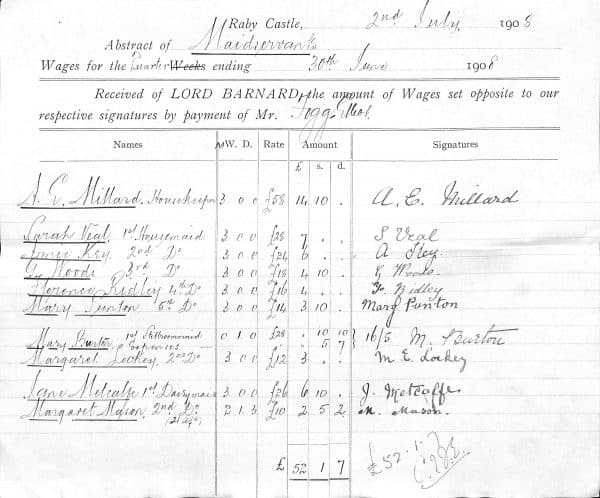
During the first UK lockdown, a number of our willing band of volunteers who so tirelessly support Raby worked with our Curator on a project to understand more about the people for whom Raby Castle has been their workplace.

Transcription and analysis of some of the records relating to Raby’s servants at various points from the 1890s to the 1920s is helping to build up a picture of how life changed for working people during decades that saw major advances in domestic technology, not to mention political change and war on a scale that had never been seen before.

One such role that can be traced from the records is that of the Dairymaid. In 1900 Raby Castle employed two dairymaids. Jane Metcalf and Cissie Glendinning. Jane was 1st Dairymaid with an annual salary of £26 – slightly higher than the corresponding role of 1st Kitchenmaid. Cissie  was in training as 2nd Dairymaid and earned £10 a year.

Research into the archives suggests that rather than going “a-milking” the two dairymaids would have collected milk and eggs daily from Raby’s Home Farm. Their job was then the regular production of dairy products for the family and servants hall; churning butter, separating cream and making different cheeses for the household.

Jane and Cissie would have been expected to keep the dairy spotlessly clean and hygienic – in the preceding decades, advances in the study of chemistry and microbiology had greatly improved understanding of the scientific basis for food hygiene. The works of scientists such as Louis Pasteur soon impacted in a domestic setting and the nation became obsessed with the previously hidden world of bacteria and germs.

Jane is known to still have been working for Raby in 1908 (as seen on the wage record pictured here), although Cissie had been replaced by Margaret Mason – both women on the same salaries as in 1900.

The project to transcribe the Raby servants records continues, so that in future we can build up a clear picture of the working life of the estate. Thank you to all of the volunteers who have been involved.

Nine Ladies Dancing
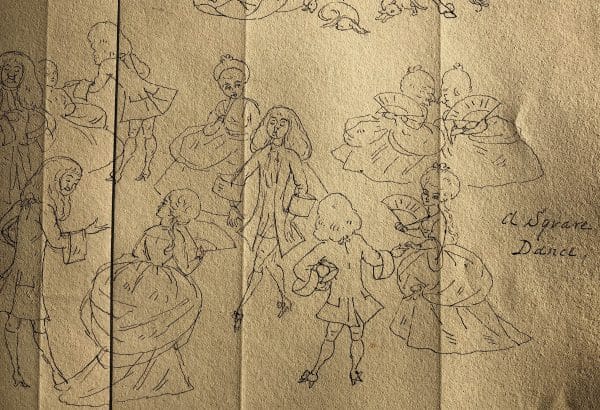
Ever since its earliest origins, Raby Castle has been a place where people have been welcomed for music, feasting and dancing. Generations of the household and their guests were entertained from the rare stone Minstrel’s Gallery in the Barons’ Hall and over the centuries, parties, balls and concerts have continued the tradition.

During the 19th century, visitors staying at Raby were encouraged to write in the castle’s visitors book. These incredible books are now housed in the Raby archive and are filled with witty comments, jokes and poems about the hospitality received.

Many visitors chose to reflect on their stay through drawings or paintings rather than words. Here, the illustrator Richard Doyle who was a regular visitor to Raby Castle,  states his reason for visiting in 1869 as “to Dream of Raby in the Olden Time”. Taking up two full pages of the visitors book, Doyle fills the space with illustrations of card games, sumptuous meals and here, his imagining of ladies and gentlemen enjoying a square dance.

Ten Lords A Leaping
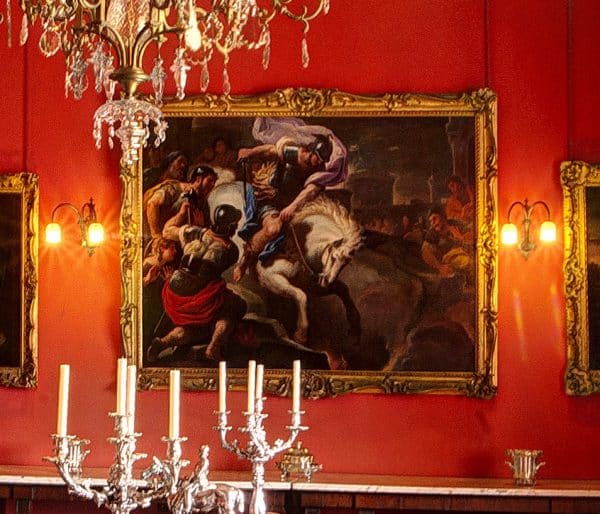
Raby Castle has been home to many Lords and is currently owned by the 12th Lord Barnard. It is not really known why in The Twelve Days of Christmas the Lords are ‘A-Leaping’ but it certainly implies a degree of energy and progress; leaping forward or leaping into action.

Type the word ‘Leaping’ into the collections catalogue for Raby Castle and one item ‘leaps’ out. Earlier this year our Senior Guide Keith Simpson revealed that his favourite in the Raby collections is the 17th Century masterpiece ‘Marcus Curtius Leaping into the Gulf’ by Luca Giordano.

On our tenth day of Christmas,  Keith shares his passion for the painting which is on display in the Dining Room at Raby Castle. Read more here.

Eleven Pipers Piping
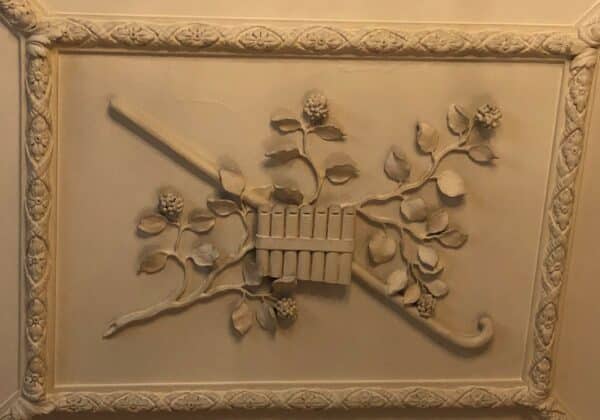
Look up in the Small Drawing Room at Raby Castle and you will discover clues to the room’s past use.

Much of the architectural detail of this room dates from the mid-18th century when architects James Paine and Daniel Garrett worked at Raby.

Musical instruments abound with pan-pipes, a horn and a lute. In the  late 19th century, the 4th Duchess of Cleveland tells us in her ‘Handbook of Raby Castle’ that the room was used for music … but only in the morning!

Other symbols on the ceiling reflect different interests of the couple, including commerce and outdoor leisure. The room is still filled with art and artefacts that reflect the interests of the family in years go by, and in particular a love of horses and a celebration of the prizewinning racehorses that were bred in the 18th and 19th centuries on the Raby Estate.

Twelve Drummers Drumming
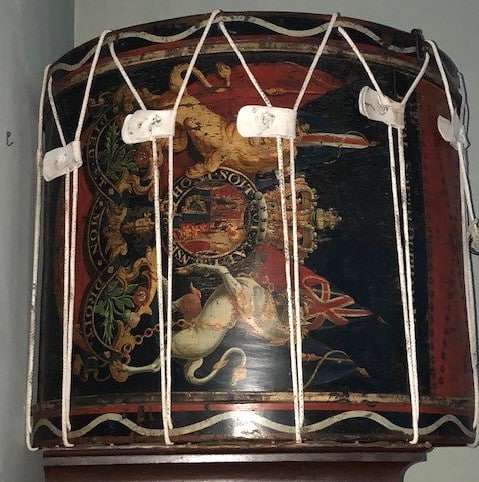
 

Our last item in the Twelve Days of Christmas series is this impressive Regimental Drum of the South Durham Militia.

The Durham Militia was formed in 1759 by the 2nd Earl of Darlington, owner of Raby Castle, after retiring from the army the previous year.

Initially made up of 369 Militiamen who met monthly for training – carrying out their normal lives in between. In times of emergency, the Militia would be deployed as regular soldiers.

The Regimental Band was an important part of military life and the Durham Militia is no exception. This beautifully painted bass drum dates from after 1853 when the Durham Militia divided into the North and South Durham Militia but this was not the end of the story.

When the county’s famous Durham Light Infantry was formed in 1881, the North and South Durham Militia became the 3rd and 4th Battalions. Later generations of the family went on to serve in the DLI and their uniforms form part of the collections of Raby Castle.
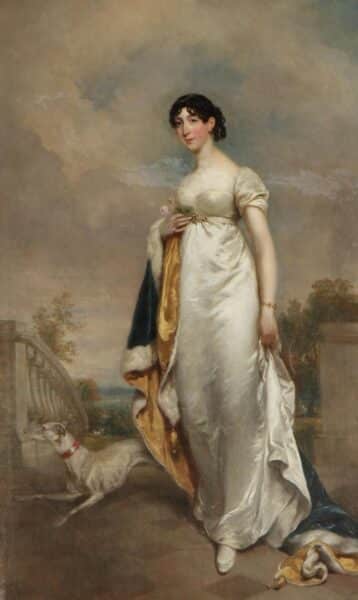
 

Visitors today might think of Raby Castle as a ‘museum’, but this is not the only time in its history where it has been considered as such. In the first half of the 19th century, Elizabeth (c.1777-1861)—the second wife to the 1st Duke of Cleveland (1766-1842)—compiled at Raby ‘a most curious Museum of Natural History, collected with much care, skill and attention’ [1]. This museum, however, was not to everybody’s taste. Nor did it survive beyond the mid-19th century.  During 2020, Raby intern Dorothea Fox has studied the collection at Raby Castle as part of her postgraduate studies at Durham University. Here she reflects on her findings and what they tell us about Raby’s past.

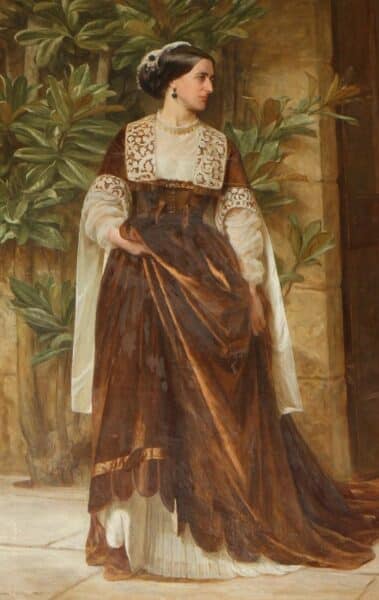
Elizabeth (c.1777-1861), 2nd wife of the 1st Duke of Cleveland who established a “most curious Museum of Natural History” at Raby Castle.
So what happened to Raby’s Museum of Natural History? It is likely that the collection of ‘museum’ objects was disassembled during restoration work between 1843-1850. After that time, the taxidermy and natural-history collection were moved from room to room until a suitable home could be found for them. The movement of these objects was recounted by the 4th Duchess of Cleveland in her Handbook to Raby Castle. This year marks the 150th anniversary since the publication of her guidebook—an important resource to understanding the history of the house.
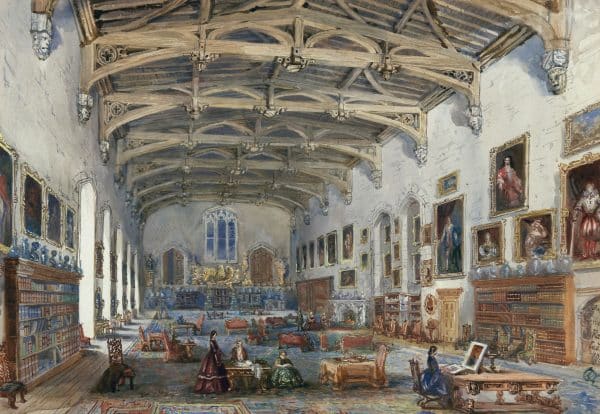
The 1st Duchess’s museum was located in the Barons’ Hall. With dimensions of 132 feet by 36 feet by 32 feet, this was an impressive space in which to exhibit her natural-history collection. Not only that, but the space carried with it the powerful memories of former times. In many accounts, it is noteworthy for entertaining 700 knights and retainers of the Neville family at once, and for being the site where, on 13 November 1569, a great council of northern nobles decided upon an insurrection against the Crown—the fatal ‘Rising of the North’.

By the time of Raby Castle’s 1842 inventory, there is a sub-heading, ‘The Museum’, under the section on the Barons’ Hall. It is described as ‘consisting of various glazed cases of specimens of Natural History, Cabinets, Indian Curiosities, and Oriental Porcelain’.  An article from 1833, which featured in the American women’s magazine, Lady’s Book, sheds more light on the diverse objects:

‘The rough inmates of the forest, harmless as the fierce barons who once feasted beneath the fretted roof, are chained in mimic life to guard the doors. Handsome glass cabinets are arranged around the walls, enriched with all that mineralogy can yield, mingled with shells, fossils, bones, dried specimens of animal and vegetable life, works of art, and relics of the olden times. Several articles connected with the worship of the Catholic Church are here preserved. Amongst others, a curious cross, or rood, as it was anciently called, and a spoon set with precious stones, doubtless formerly used in the ceremony of consecration.’ [2]

While the author of this account is unknown, the castle and its museum were clearly deemed of interest to an American audience: whether as visitors or as readers of the magazine.

Displaying ‘natural’ matter alongside ‘cultural’ artefacts corresponds to the idea of the ‘cabinet of curiosity’. Across Early Modern Europe, collectors, curators and visitors were driven by inquisitiveness into objects that were rare and unexpected, producing eclectic wunderkammer—cabinets of wonders. While some private collectors like Duchess Elizabeth continued these practices, from the 18th-century ‘Enlightenment’ period there was a shift towards more narrowly-focused displays, paralleling the development of public museums and a division between the ‘arts’ and ‘sciences’.

But the cabinet of curiosity still presented a form of intellectual stimulation to those who were excluded from ‘academic’ study, particularly women. Processes of collecting and arranging nurtured their creativity, using the patterns and details of nature as a guide to aesthetic harmony. Moreover, it brought knowledge of science, archaeology, art and religion to bear on decorative practices, enabling women to engage with these subjects in a manner that was considered socially acceptable.

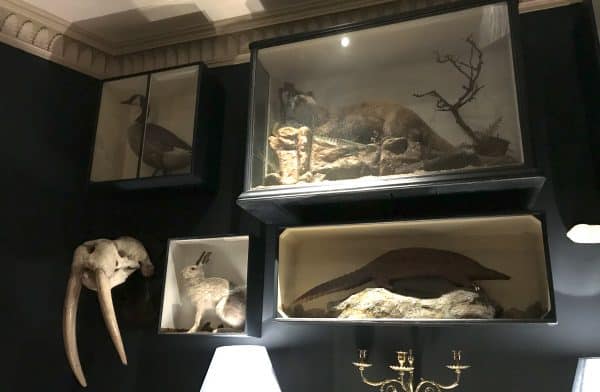
Historic display of tropical birds which probably formed part of the 1st Duchess’s museum. Still on show at Raby Castle.
The Portfolio magazine praised Duchess Elizabeth for these wider implications of her museum:

‘[she] has devoted a great portion of her attention to Improvements both in the castle and grounds, and has gone to considerable expense and labour in the formation of a museum, which bids fair to rival any private collection this country has to boast.’ [3]

There was logic in her transformation of the Barons’ Hall into a display room—a museum. Since its inception, the room was a decidedly public space. As a ‘medieval hall’, it would have received guests and followers; a single, open room in which people ate, entertained and slept. From the late eighteenth century, the Romantic movement revived an interest in medieval halls, converting them to suit contemporary purposes. The nineteenth-century architect, Augustus Welby Pugin, was anxious to restore these ‘capacious’ spaces so that the aristocracy ‘might exercise the rights of hospitality to their fullest extent’: where noble and humbler visitors ‘partook of their share of bounty dealt to them by the almoner’. [4]

Within the Barons’ Hall, therefore, noble hosts were expected to perform public acts of generosity and chivalry. These behaviours were thus adapted to the circumstances of the 1st Duchess. She demonstrated aristocratic munificence by offering an abundant, multicultural cornucopia—her own miniature world in which the diverse relics of natural and human history were assembled and made visible under glass cases.

Not all visitors, however, approved of Duchess Elizabeth’s curatorial vision. In 1828, The Sporting Magazine cautiously remarked that ‘[the Barons’ Hall] is now filled with all the curiosities of the mineral, vegetable, and animal world; but on this subject I am silent.’ [5] Meanwhile, the historian-tourist William Howitt, in his Visits to Remarkable Places (1842), complained that:

this hall, which should only display massy furniture, suits of armour, and arms and banners properly disposed, is converted into a museum of stuffed birds, Indian dresses, and a heap of other things which may be better and more numerously seen elsewhere. In fact, any ordinary room of this many-roomed castle might have served this need.’ [6]

Howitt clearly believed that this space should have been treated with utmost veneration for its medieval origins; glass cabinets of birds, insects and shells seemed out of place. This may relate to the ‘professionalisation’ of history across the nineteenth century, during which the boundaries of ‘history’ were demarcated from other subjects, such as those that came to be classified as ‘science’.

It is not certain when the museum was dismantled, but, as mentioned above, it probably coincided with the architectural renovations of 1843-1850. Elizabeth’s successor, Catherine Lucy Wilhelmina, the 4th Duchess of Cleveland, documented her criticisms of the natural history collection in her Handbook to Raby Castle (1870)—a guide to the house, its history, its contents and its inhabitants. This is despite the fact that the 4th Duchess never saw the museum in its intended layout.

Catherine Lucy Wilhelmina (1819-1901), 4th Duchess of Cleveland and author of the Handbook to Raby Castle.
Throughout the Handbook, the author implies a curatorial conflict with her predecessor. While the 1st Duchess lavished care and attention on the objects she compiled—valued so highly, they were granted ‘museum’ status—the 4th viewed them as something of a burden. Her relationship with the natural-history objects, and her efforts in rearranging them outside of a ‘museum’ context, were partially recounted in the Handbook.

The natural-history collection posed a formidable problem: how could the 4th Duchess integrate these objects into the lived-in spaces of the castle? She made no attempt to re-establish the Baron’s Hall museum—a decision which seemed to correspond to her belief that ‘the chief interest of Raby consists in its bringing so visibly before one of the long-past ages of feudalism’.

Accordingly, the Handbook pays special attention to listing the ‘gallery of fifty-four portraits, consisting almost entirely of family pictures’ in the Barons’ Hall. This was a product of the 4th Duchess’s direct curatorial intervention: ‘I found almost all these pictures taken down and piled up against the sides of the room, and felt the task of re-hanging them rather a weighty responsibility.’

The Barons’ Hall, Raby Castle, mid 19th century. This watercolour must have been painted not long after the museum was disbanded.

The 4th Duchess frowned upon the former arrangement of natural-history objects here, fashioning the Baron’s Hall into a ‘receptacle for all kinds of lumber’. She deplored the ‘old Duchess’ who ‘had even the common swans and foxes brought in to be stuffed’—native animals that possessed no value in peculiarity. She also ‘felt a positive regret at the money which … had been spent upon shells alone.’

In designating the 1st Duchess’s museum as ‘lumber’—cluttered odds and ends—the 4th separates herself from the then out-dated practice of the wunderkammer. In contrast, her priority for the Barons’ Hall was to draw attention towards its medieval connotations and its significance in the history of the family.

An assorted collection of natural and cultural objects might have appeared harmonious to Elizabeth, but in the eyes of Catherine it was a ‘great array’ of incongruous and indiscernible things—in stark contrast to her own vision for the Barons’ Hall.     Her Handbook can help to reveal to the afterlives of some of the natural-history objects once they had been removed from the Baron’s Hall. In what must have been a temporary measure, 51 cases of ‘preserved birds, animals and insects’ found their way into the Stucco Anteroom—a space that is minuscule in comparison with their previous home.

Unwilling to leave the anteroom ‘crammed with stuffed birds and beasts’, the 4th Duchess removed some to the Smoking Room, which they overflowed, and from there to ‘various remote and unfrequented parts of the castle’. In these dark and mysterious corners of the house, she left them ‘dwelling in strict retirement’. We also learn that during the time of the 2nd Duke, ‘three cartloads of spars and crystals’ were put into storage in the Bath House, situated about 800m south-west of the castle.

Other specimens and remains were simply given away: the 4th Duchess writes that she ‘was fortunate enough to dispose of [them] as presents to neighbouring amateurs.’

Not all of the animal, vegetable and mineral matter met the same fate. The Handbook mentions three stuffed creatures which its author managed to reconcile with her decorative arrangements for the Entrance Hall and Corridor: a platypus, a polar bear and a small crocodile. Some visitors may still remember the crocodile, which continued to inhabit the Entrance Hall into recent times.

Historic natural history displays at Raby continue to be appreciated as rooms are refurbished.

The story of Raby’s ‘Museum of Natural History’, therefore, is the story of two women—the 1st and 4th Duchesses of Cleveland—who took vastly different stances on value of these objects. In their divergent ways, these women demonstrated their aesthetic and intellectual visions for the castle.

The precise whereabouts of the huge natural-history collection compiled by the 1st Duchess is still something of a mystery; although glimpses can be found in the castle collections today. Even more of a mystery is what actually constituted the ‘Museum of Natural History’: what exactly were all the specimens, artefacts and remains that were once displayed in the Baron’s Hall museum? To trace the lives of these objects, animals and specimens—where they came from, when and how they entered Raby’s collection, and what happened to them after the disbanding of the ‘museum’—would certainly be an exciting journey of discovery.

If you enjoy discovering the stories behind Raby Castle and its fascinating collections, a Raby Membership gives you free access to the Castle, Park and Gardens for 12 months.

References:

[1]  Neale, J.P. (1818), Views of The Seats of Noblemen and Gentlemen, in England, Wales, Scotland, and Ireland, Vol. I., London: W.H. Reid, np.

[2]  ‘Raby Castle’, Lady’s Book, June 1833, p.280.

[3]  ‘Antiquities of Great Britain. No. II.’, The Portfolio of Amusement and Instruction in History, Science, Literature, the Fine Arts, &c., 14 October 1828, No.21, p.331.

[4]  Pugin, A.W. (1841), True Principles of Pointed or Christian Architecture, London: Henry G. Bohn, p.61.

[5]  ‘Nimrod’s Yorkshire Tour’, The Sporting Magazine, January 1828, Volume. 21, No. 71, p.203.

[6] Howitt, W. (1842), Visits to Remarkable Places: Old Halls, Battle Fields, and Scenes Illustrative of Striking Passages in History and Poetry: Chiefly in the Counties of Durham and Northumberland, London: Longman, Brown, Green, and Longmans, p.258.


Raby has gained a huge number of new Raby Membership holders this year, many of whom have taken the trouble to tell our team how much they have appreciated being able to access the outdoor spaces and enjoy nature at a time when everyone’s lives have been so restricted.

Peter and Elaine Gunton from Bishop Auckland became Raby Members for the first time earlier this year, just before the first lockdown. In a year of restriction and uncertainty, Raby has become the perfect retreat for them and they have visited most days, watching the seasons change. They spoke to us about what spending time at Raby means to them.   

Your Raby Membership has been well used this year – what’s the best thing about it?  

We’re outdoors people and we love the wildlife, the trees, the gardens, the whole place. Being able to come here with our dog, every day if we want to, has meant such a lot to us, especially this year. We use it at High Force too, which is another fabulous place. We’ve visited so regularly that we worked out it had paid for itself in the first week – we just wish we had done it years ago!   

Deer Park by Peter Gunton


Having watched the seasons change in the Park and Gardens, has any particular time of year stood out?  

Every day is different, and there’s always something new to see, whether it’s the light on the castle, the colour of the leaves, the flowers in the gardens or the wildlife, it’s never the same two days running.

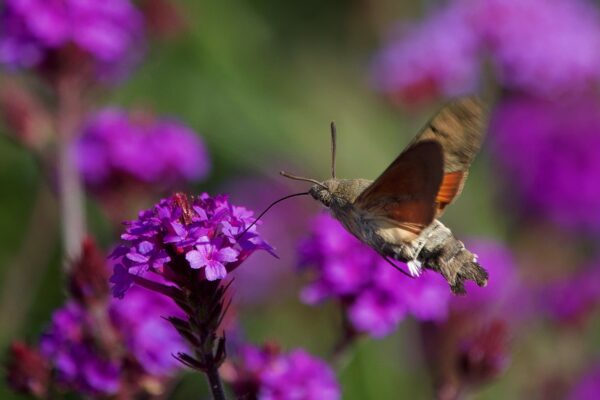
Hummingbird Hawk Moth by Peter Gunton


Do you have a favourite spot? 

There’s a bench over the hill by the top pond where we like to sit and relax. It’s so peaceful there and it really clears your mind. We like chatting to people as they pass or just simply enjoying the view. We love the gardens too, they’re incredible. They keep on giving, day after day and we enjoy chatting to the gardeners, who do a fantastic job. In the gardens there’s a sheltered place to sit, looking down towards the fountain, where we can enjoy the view even on a wet day.   

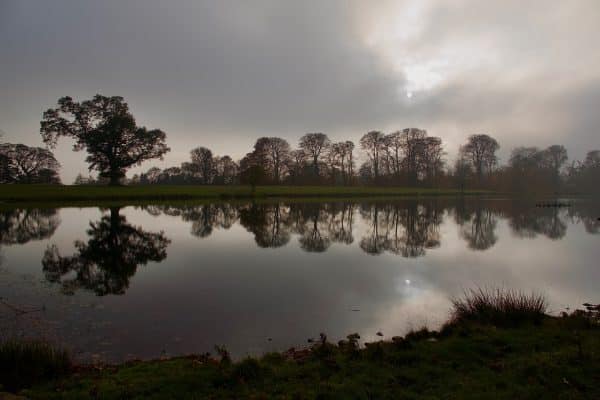
Raby Lake by Peter Gunton


Peter, your beautiful photos have been shared with hundreds of people through our social media channels. Do you have a favourite wildlife subject? 

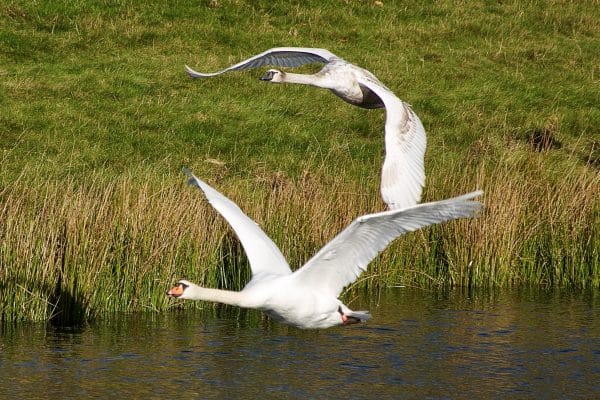
The deer are a real favourite of mine. Sometimes I might catch the fallow deer playing or a red stag posing for the camera. I’ve really enjoyed photographing the swans and cygnets this year too. We’ve been watching the babies since they were little things on the lake and it’s been fascinating seeing them grow.  


Swans in flight by Peter Gunton


Why has Raby been so important during lockdown?  

It’s been a lifeline and most importantly it has always felt safe. Even on days when the car park seems busy, the Park and Gardens feel quiet and there is plenty of space for everyone. The staff have been fantastic in that respect, making sure there is plenty of hand sanitiser available and all the necessary measures are in place.   

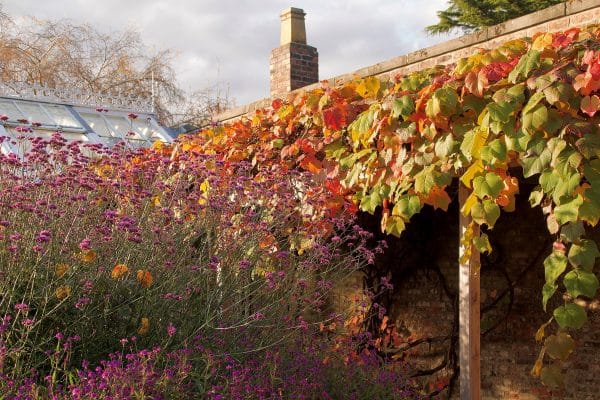
Walled Gardens by Peter Gunton


Is there anything that has really stood out during your visits?   

The people who work at Raby are incredible. They always have time for you and everyone is so pleasant and helpful. There’s such a lovely atmosphere both at Raby Castle and High Force and the staff can’t do enough for you. It really does make such a difference.

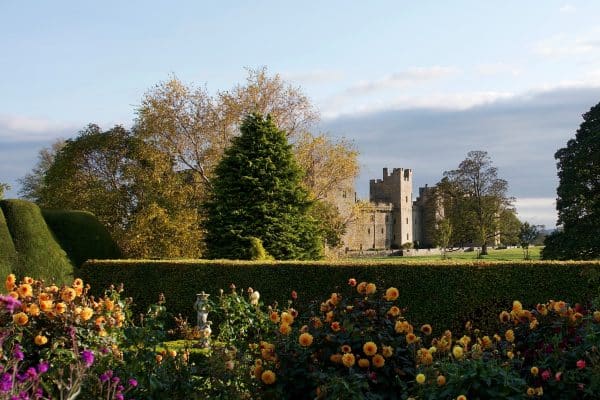
View from the Gardens to the Castle by Peter Gunton

A Raby Membership  makes the perfect gift – or why not treat yourself to free admission for a whole year (excluding special events) plus 10% off in the Stables Shop, Cafe and Kiosk and 10% off at High Force Hotel and Kiosk.

The River Tees has a reputation among anglers as some of the best wild Brown Trout water in the North of England. This was proven by the success of the Northern River Masters, held on the Estate in July 2020, which saw 501 Trout caught and released over two days during the competition.

Whilst wild Brown Trout are a regular sight on the Tees, another species of fish showing a resurgence is the Atlantic Salmon. Salmon are a
magnificent fish that are born in fresh water and migrate large distances out to sea, returning to the exact same stream that they were born in years later to restart the cycle.

Salmon have always been present in the River Tees but numbers had declined over recent decades, as they have throughout the world, due to commercial overfishing at sea, predation and rising sea temperatures. Other factors that have added to the decline of salmon in the Tees are industrial and agricultural pollution, The Tees Barrage and the construction of Cow Green Reservoir in the late 1960s, which reduced the availability of gravel essential for their spawning grounds. The Tees, however, is now a ‘healthy’ river that has been the focus of many environmental measures designed to protect and support the habitats and improve water quality.

The number of fish in rivers is generally measured by catch records or by fish counters. There is a fish counter in the Tees Barrage which provides some data but only covers part of the river and counters are notoriously temperamental meaning that some fish pass uncounted. With regards to catch records, fishermen generally like to catch fish and so will tend not to fish a river if they don’t believe they stand a chance of catching anything.

It has been said by anglers that there aren’t any Salmon in The Tees, this brought rise to an idea of a Salmon Angling Weekend which was supported by the Tees Rivers Trust and organised by Fly Fishing Yorkshire. 120 anglers descended on the River for the last weekend in October 2019 actively targeting Salmon. Whilst the numbers of fish caught were low, it was exciting to prove that there are indeed Salmon in the River Tees and the anglers certainly enjoyed the hospitality of the High Force Hotel which was used as a base for the competition.

This Salmon fishing season (which runs from 1st February to 31st October) has seen reports of Salmon being caught all along the Tees with a number of fish being landed on the Raby Estate water in Upper Teesdale, the largest of which weighed 15lbs.

No one knows why a Salmon will take a fly or lure, given that they do not feed in fresh water and only return to spawn, so to catch a Salmon is an incredibly exciting experience and this is why anglers spend a lot of time and money travelling the world to try and do so. The recent activity has proved beyond doubt that Salmon are back in the River Tees and anyone wishing to fish the Raby water can do so, in season, by purchasing a day ticket or season pass through the website.

Will Witchell, Rural Surveyor

October Half Term is the perfect time to pull on your coat, slip on your boots or wellies and head to Raby to crunch through the leaves and enjoy our wide open spaces. There’s so much to see and do while you’re here.

Scaries and Fairies Halloween Trail

Blow away the cobwebs on our family friendly Half Term trail in the Walled Gardens. Come and find the magical mythical creatures who have taken up residence in the gardens.

The trail is ideal for younger children, particularly those aged 11 and under. Dressing up is encouraged!

Admission to the trail is included in the price of a Park and Gardens (and Castle, Park and Gardens) ticket.

Buy your Park and Gardens ticket here.

Exploring the Castle

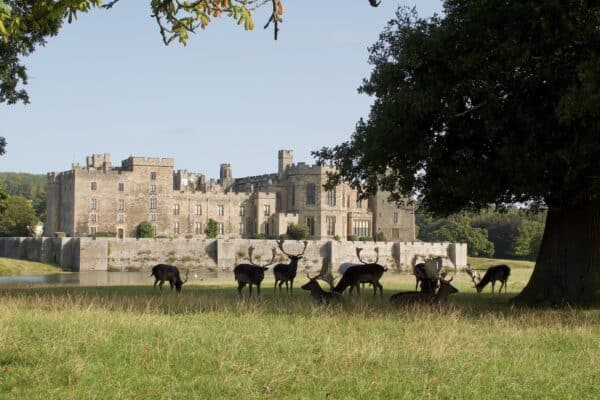
Raby Castle is one of the most impressive, intact medieval castles in the North of England. It was built in the 14th century by the powerful Nevill family and once would have been surrounded by a moat full of water, with a drawbridge across.

Look out for the original pieces of armour in the Grand Entrance Hall and discover the Old Kitchen, which was in continuous use for more than 600 years. Ask our knowledgeable guides to point out the special ledges and windows high up above the kitchen, where knights and soldiers once kept an eye out for danger.

The Castle will be open from Wednesday to Sunday during Half Term, before it closes for the season on November 1st. Buy your Castle, Park and Gardens tickets here.

Spotting deer

Deer spotting is a favourite family pastime at any time of year – and especially in the autumn, during what’s known as the rutting season. If you’re lucky enough you might see two stags locking horns (rutting) amongst the trees.

We have large herds of both Red and Fallow deer. They’re easy to tell apart because the fallow deer are smaller, and some have spots. You can learn more about the deer before you visit by downloading our deer activity sheet.

Woodland Play Area

For those who still have some energy left after running around the Deer Park and exploring our Scaries and Fairies Trail, head to the Woodland Play Area for even more climbing and scrambling before refuelling at the Stables Café.

Café and Kiosk

Our Stables Café is open every day for grab and go food, Spooktacular snacks and hot and cold drinks. Our outdoor Refreshment Kiosk will also be open during Half Term serving the same menu as the café.

We look forward to welcoming you this Half Term for lots of outdoor family fun!

As we continue our Favourite Things series, Senior Guide Keith Simpson shares his fascination with one of the most dramatic paintings in the Castle, ‘Marcus Curtius Leaping into the Gulf’ by Luca Giordano.

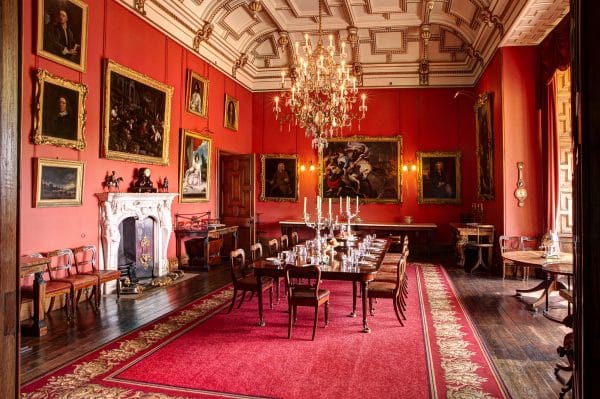
This imposing piece of art takes pride of place in the dining room, where distinguished guests would have been entertained.

Keith says:

What a painting! What is it all about? What relevance can it have today? Is it just some old painting by a long dead artist that is antique and antiquated.

I had no idea. My guidebook didn’t tell me much. I was clearly meant to be impressed, but why should I be? Why did it still have pride of place at one end of the Dining Room?

Lots of questions but what are the answers?

Luca Giordano was dead by 1705, so this is a pretty old painting. Born in 1634 in Naples, his career began with him learning his trade there in about 1650. In the 1670s to 1690 he worked in Florence. Between 1692 and 1702 he worked in Spain as a Court painter. From 1702 until his death he worked in Naples.

Marcus Curtius. A legend nothing more, but what a tale: after an earthquake in 362 BC a chasm opened up in the Roman Forum. The seers of Rome said it would never close unless Rome’s most precious thing was thrown into it. Marcus Curtius put on his armour, mounted his horse, drew his sword and declared “Rome can have no more precious thing than a brave citizen!” He then rode his horse into the abyss. The chasm closed, and Rome was saved. Hurrah!

What relevance does it have for a young gentleman doing the Grand Tour? It was about ancient Rome and all that was of interest to any Grand Tourist in the late 17th and early 18th Century.

What about now? Marcus Curtius gave his life to save Rome. The question in the last century, and this, is which of us would be prepared to do the same? Quite a daunting thought, and why this painting although old has a thought-provoking message for us right now.”


The painting of Marcus Curtius Leaping into the Gulf’ by Luca Giordano.


The work of art has pride of place in the Dining Room at Raby Castle.
For more stories and photos of our team’s Favourite Things from the Raby Collections, follow us on Instagram and Facebook

Why not visit the Castle and discover your favourite things? The Castle is open to visitors Wednesday to Sunday throughout October. Tickets must be pre-booked and we are running morning and afternoon sessions to help us manage numbers safely. Book Castle, Park and Gardens tickets here

Read about Castle Custodian Alan’s Favourite Things in our blog

Raby Castle is home to an incredible collection of art, artefacts and antiques which have been curated and cared for over many centuries.

Everyone who is part of the Raby family, whether staff or volunteer, has their own favourite and over the coming weeks they will be introducing these to you on our blog and social media channels.

It seemed appropriate to start this series by asking our Castle Custodian, Alan, about his favourite things in the Raby Collections.

For Alan, it is not so much a single object but the ability the Castle has to show changes in attitude and advances in technology over such long periods.

Alan says:

“With almost 700 years of history at Raby Castle, and the mantra of ‘never throw anything away’ we have a rich bounty of objects giving clues to life at the Castle through the centuries.

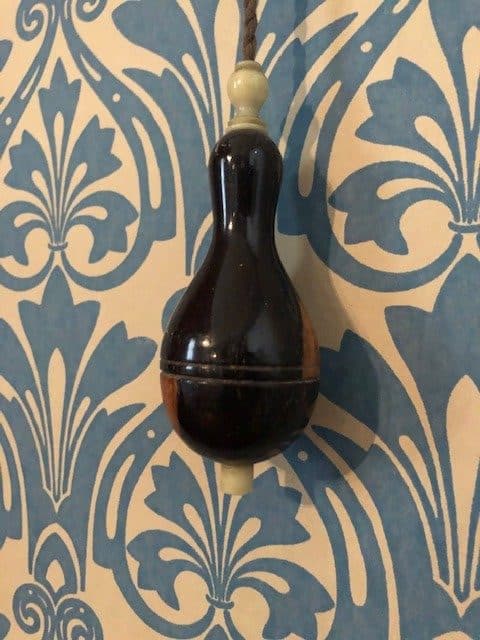
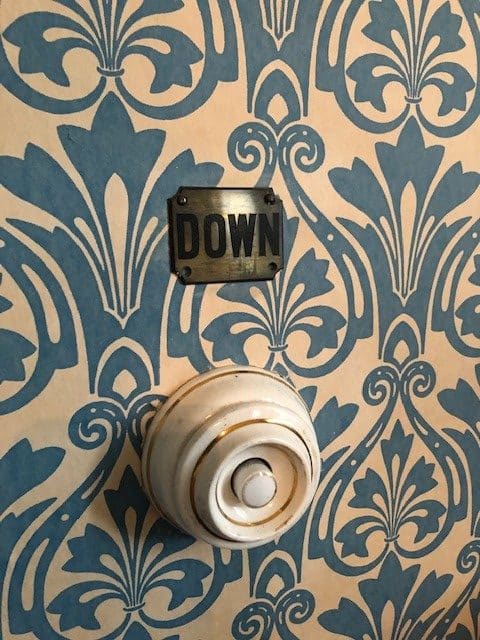
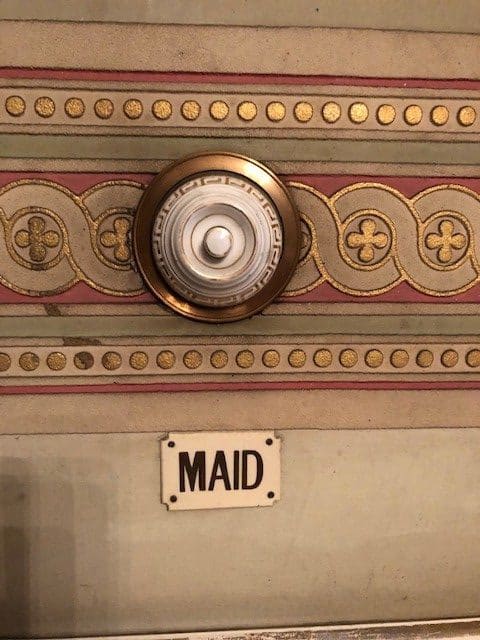
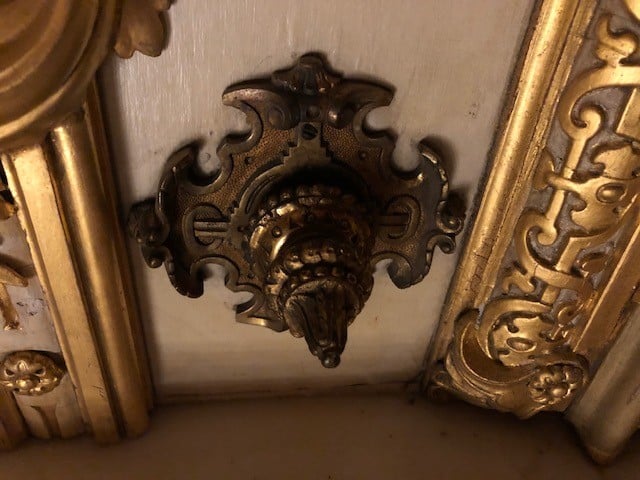
My favourite are those which show how servants and staff communicated.

Up until the 17th century it was common to have servants located close to great halls with the buttery, pantry and kitchens nearby. As attitudes changed, servants and their working areas moved out of sight and communication with them became more difficult.

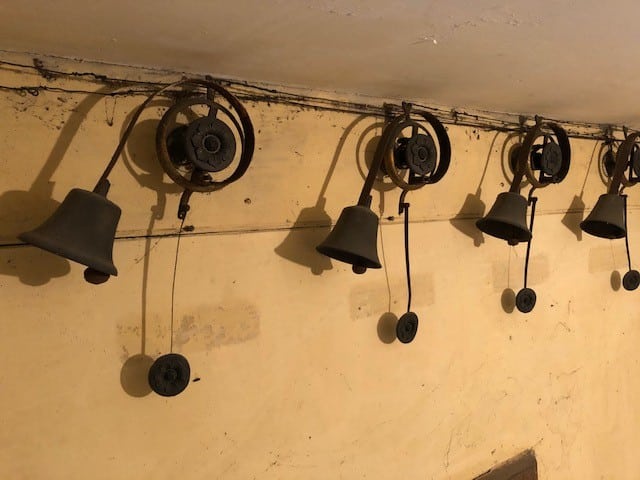
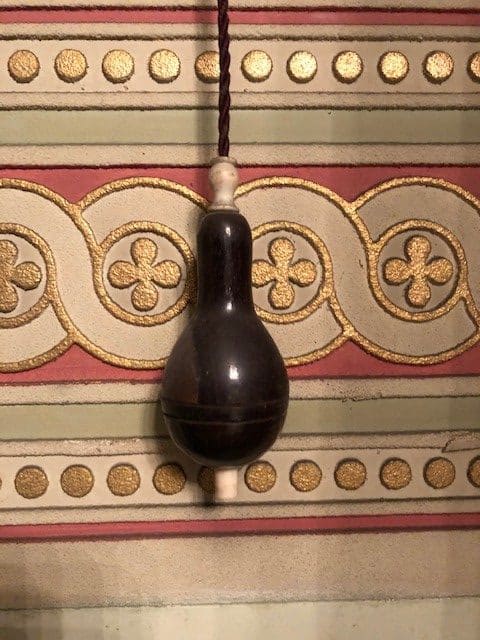
Raby has a number of examples, some of which are still on display in our open rooms. We have many of the iconic Sprung Bells, which were operated by bell pulls and rotary levers of all different styles and controlled from great distances. It fascinates me that some bells at the top of Cliffords Tower are operated from rooms 80ft away and most cables and pulleys are still under the floors or hidden behind plastered walls.

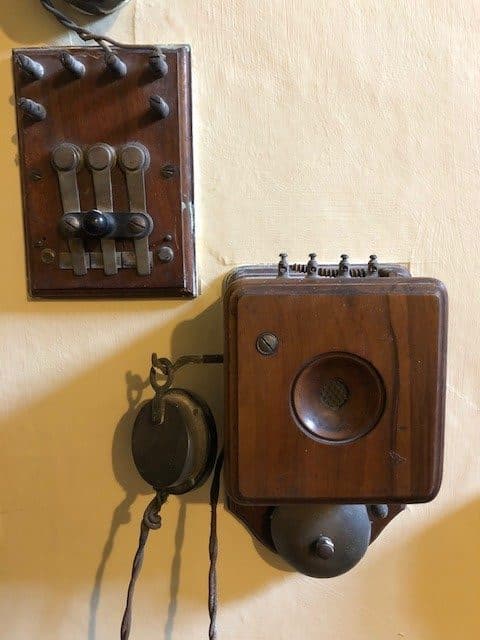
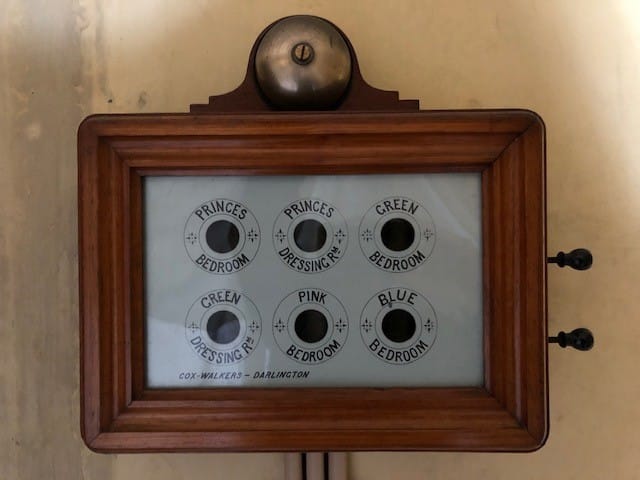
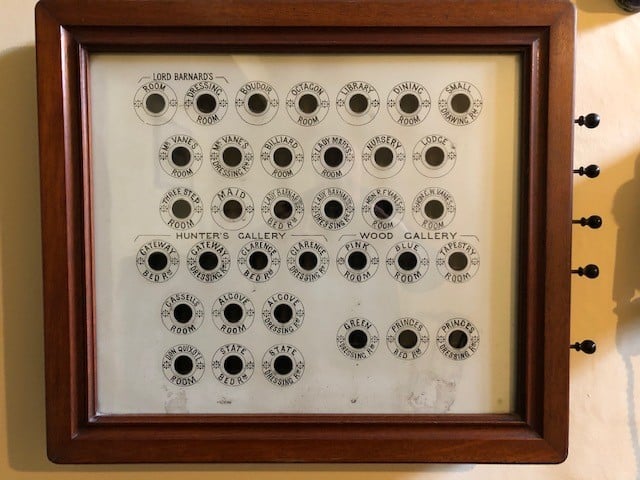
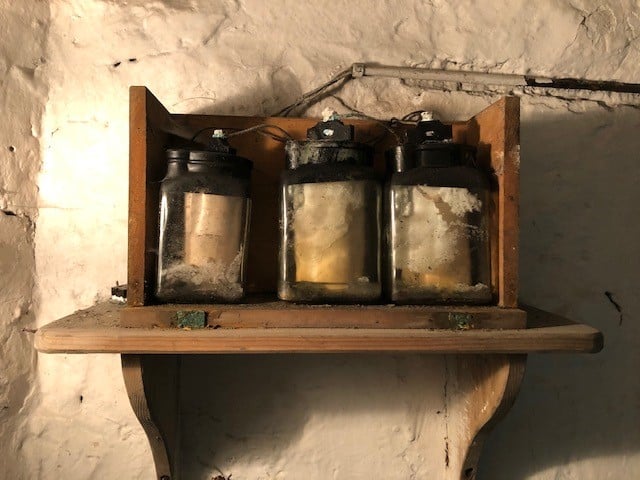
By the mid 19th century, battery technology was developing and this saw the introduction of the Electric Bell which was then coupled with an Indicator Board. There are some great examples at Raby in our Butler’s Pantry and throughout the Servant’s Room located in the upper part of Cliffords Tower. We still have the batteries that powered these in various locations around the castle, hidden from public view.

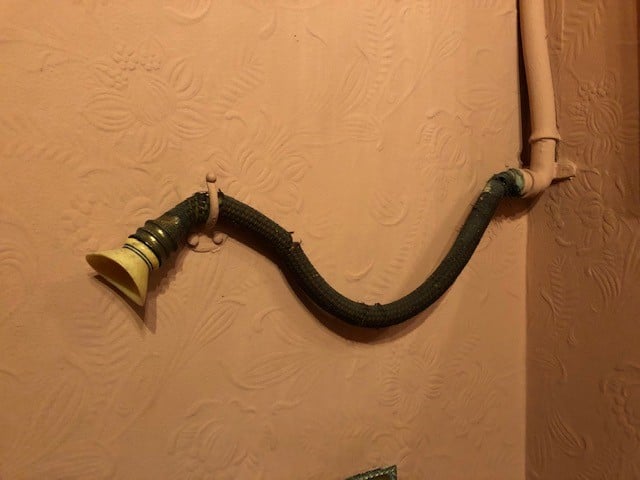
Raby Castle also has some fine examples of speaking tubes which allowed direct communication with servants. This avoided the need to go to an indicator board first and so reduced unnecessary journeys. These would have a mouthpiece at both ends and there would usually be a whistle at the servant end to attract attention.

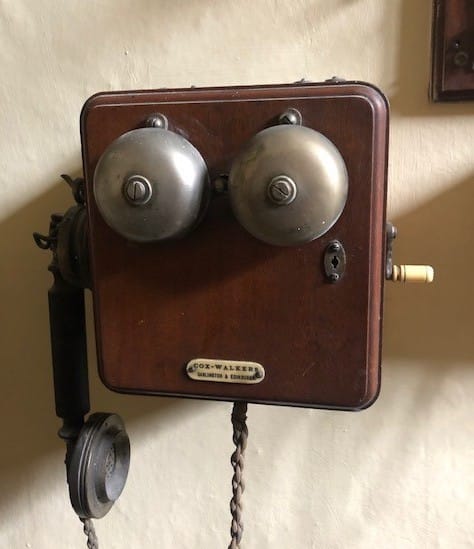
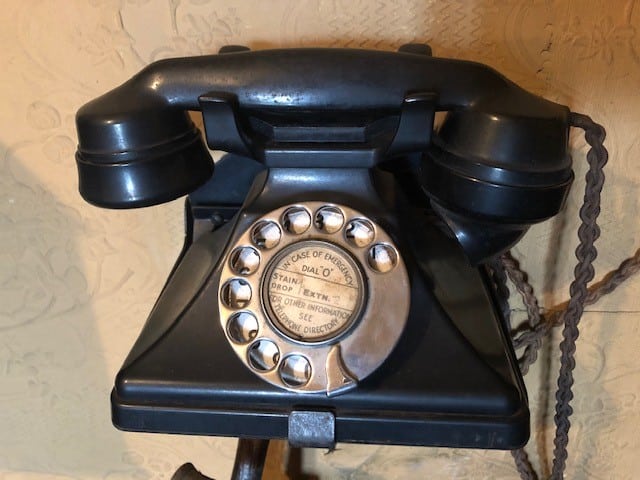
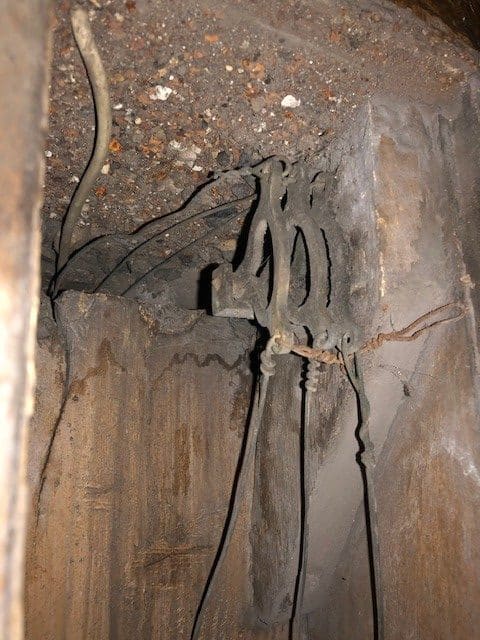
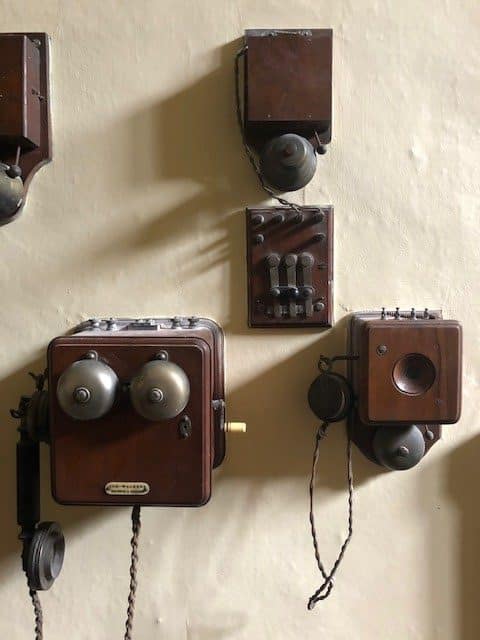
Telephones and small exchanges became possible from the 1880s and at Raby I understand there was a small internal exchange in the Porter’s Lodge. Unfortunately, the equipment is no longer there but a large battery bank is still in place behind the panelling. Our Butler’s Pantry has an example of a wind-up telephone and receiver made by Cox-Walker in Darlington. There are a number of Bakelite phones located in redundant offices within the castle and we hope to be able to display them at some point in the future.”


For more stories and photos of our team’s Favourite Things from the Raby Collections, follow us on Instagram and Facebook.  

Why not visit the Castle and discover your favourite things? The Castle is open to visitors Wednesday to Sunday throughout October. Tickets must be pre-booked and we are running morning and afternoon sessions to help us manage numbers safely.


Stories have been created and told at Raby for centuries and through the ages our magnificent Castle has been home and host to families and friends, knights and politicians, plotters and pacifists and artists and influencers.

During lockdown we invited our 21st Century visitors to use their imagination to create their own stories, inspired by the grand fortification that has been part of the local landscape for almost 1000 years.

Our staff and volunteers have been overwhelmed by the talent and creativity of all those who entered. We have been fascinated by the intriguing tales and mysteries that have been submitted and have enjoyed reading every single one.

Judging so many excellent entries was no easy task and we would like to congratulate everyone who took part.

The top three entries in each category have been published on our website and you can read their short stories by clicking the links below.

Thank you to everyone who took part and well done to our winners!

Raby Short Story Competition Winners 2020

Age 18 and over Category

Winner

The Painting by Stephen Murphy

Runners up

Invisible Hands by Laura Burdon

Brew Me A Dream by Bridget Lowery

Age 12-17 Category

Winner

Hunted by Bella Deacon

Runners up

Dinner With A Song Thrush by Jessica Bellas Carter

The Lost Girl by Amber Nair

Age 7-11 Category

Winner

Grandiflax of Raby Castle by Georgina Ellis

Runners up

The Dragon Egg by Eve Wake

The Ghost of Raby Castle by Pippa McGonigal

 “One feels as if these forked cliffs of stone had something of the solemnity of a mountain top, in remembering the hundreds of years they have towered above the country, and stood unshaken as the wind howled and raved around them”.

Handbook for Raby Castle, 4th Duchess of Cleveland (1870)  

For many visitors one of the most memorable features of a visit to Raby Castle is the impressive series of towers. To celebrate this impressive aspect, the Raby Castle Team have created a new outdoor tour of the medieval architecture, with a focus on the nine magnificent towers.  

Fulfilling a combined purpose of accommodation and defence, most of the towers have stood since the 14th century and give Raby its unique character. We take a closer look at this feature of the castle architecture and delve into some of the lesser known facts about these impressive structures.

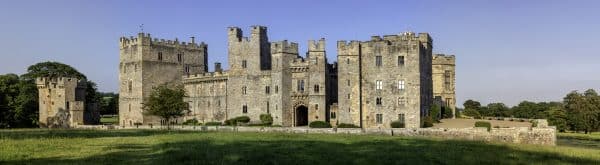
Raby Castle is one of the largest and most intact medieval castles in County Durham. Once a fortified seat of the Nevill family, since 1626 it has been the home of the Vane family, the most recent of which is the current owner, the Twelfth Lord Barnard.

Before the Norman Conquest, the site on which Raby Castle now stands was part of Staindropshire; land holdings in the possession of King Canute which he gifted to the priory of Durham. It is likely that the castle’s Entrance Hall sits on the site of an earlier Anglo-Saxon Hall, from which the building developed with eventual fortification in the 14th century.

Between the 13th and 17th centuries, royal permission was required to fortify a manor house and turn it into a castle. Raby’s ‘License to Crenelate’ was granted in 1378 but as the land fell within the Palatinate of Durham, it was granted by Bishop Hatfield rather than the monarch. The license acknowledged both the status of the family and the fortification of the building and much of the 14th century structure is still evident.

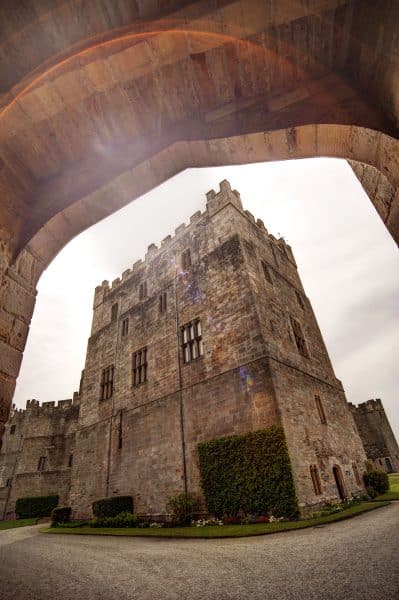
Today’s visitors enter through the gatehouse where they are met by the impressive sight of Clifford’s Tower. The tallest and largest of Raby’s 9 towers, it stands at an impressive 24m (80ft) high.  If the gatehouse was breached during an assault on the castle, Clifford’s Tower was the next point of defence; its 3m thick walls were built to withstand attack.  The naming of the tower likely originates with a strategic marriage, when in the latter half of the 14th century Euphemia Nevill of Raby married Robert Clifford of the influential Yorkshire family (who give their name to another Clifford’s Tower in the centre of York).

The next tower along the north side of the castle is the Kitchen Tower, originally built in 1360 and used daily up to the 1950s. It was originally detached from the castle interior as a precaution against the spread of fire.  Within the walls of the Kitchen Tower, about 4.5m above floor level is a cut passage-way with openings at regular intervals, a platform through which the castle could be defended. The original arrow slits were enlarged in the 17th century to form the windows that are in-situ today and were no doubt a godsend to the cooks.

The kitchen is a good point at which to think about the people who built Raby Castle. Whilst the Nevill family held the purse-strings, the development owes much of its character to the 14th century Master-Mason John Lewyn. The architectural historian Malcolm Hislop has charted Lewyns influence on monumental architecture across the north-east of England and beyond.  Today, Lewyn’s LinkedIn profile would read ‘Architect’, but when Lewyn was professionally active in the latter half of the 14th century, his role probably combined elements of engineer, draftsman, mason, project manager and surveyor. At Raby, his work included fortifications and towers, including the kitchen and chapel. The granting of the License to Crenelate in 1378 probably marked the completion of his work.
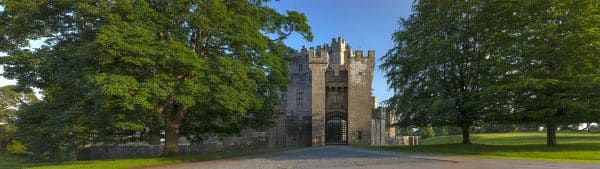
The Kitchen Tower at Raby is characteristic of Lewyns style. There are similarities with the Great Kitchen of Durham Cathedral, which was built between 1367-74 when Lewyn was principal mason to the Bishop of Durham. From the outside, the kitchen tower resembles many of Lewyn’s other towers at Raby; plain and square in shape, with neat blocks of stone that are stepped in at different levels. Writing in her Handbook for Raby Castle in 1870, the 4th Duchess of Cleveland wrote of the towers built by Lewyn,

 “Nor is there a trace of ornament to be found anywhere; as if the builders, in their stern purpose, disdained all that was not intended for use, and the severe simplicity of their work certainly shows no striving for picturesque effect”.

Journeying on from the Kitchen Tower, on the north-east corner is the tower known as Mount Raskelf, whose name comes from lands held by the Nevill family in North Yorkshire. Almost certainly one of John Lewyn’s designs,  possibly build on an earlier foundation, this tower features architectural elements that he would go on to develop in other projects, including corner turrets known as ‘bartisans’, supported by ‘squinches’ or corner arches that join perpendicular sections of wall.

In the centre of the eastern side of the castle lies the Chapel Tower; created by Lewyn to house the chapel and a guard room as well as a fortified gateway or Barbican. The Chapel Tower was altered in the 18th century when the barbican was demolished to provide a new route for carriages through the entrance hall. The structure can be seen on early 18th century engravings of the castle which show other characteristic features of Lewyn’s work in situ,  including the life-sized stone figures (known as defenders), similar to those at Alnwick Castle and removed at Raby to the Gatehouse. There may have been further similarities with Alnwick Castle’s impressive barbican which is decorated with a carving of the Percy Lion, as Raby’s featured the Raby Bull.

Tower number 5 is Bulmer’s Tower. Named after Bertram de Bulmer, the influential grandfather of the Norman heiress Isabella de Nevill who married Raby’s Saxon owner, Robert FitzMaldred in the late 12th century. Towards the top of the tower, a lower-case letter ‘b’ for Bulmer, features on the outward facing facades.  Bulmers Tower once stood isolated from the castle and is the only tower at Raby built of millstone grit. It has an unusual five-sided plan, unlike Lewyns square towers, which has been compared to similar five-sided towers in Denmark.

Passing along the southern side of the castle, Joan’s Tower in the south-west corner is named after Joan Beaufort, the daughter of John of Gaunt who married Ralph de Nevill of Raby in 1396. Half- sister to Henry IV and grandmother to Edward IV and Richard III, it is through Joan that a line to the current Royal family can be traced.  On the warmer south side of the castle, Joan’s Tower has provided accommodation into the 21st century, and centuries of enlargements and internal alterations chart the challenges of adapting a 14th century building for modern life.

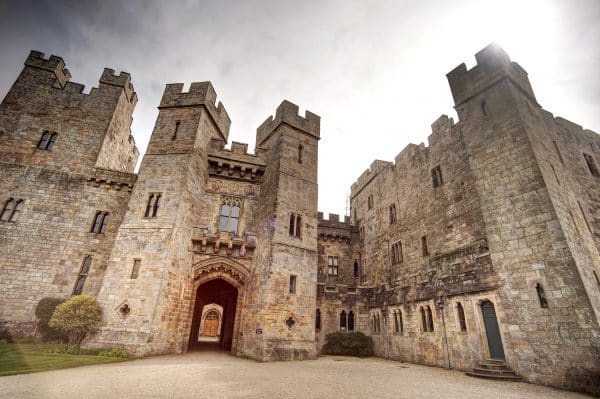
The interior of the castle is accessed on the west side through the Nevill Gateway. This impressive tower contains a beautifully vaulted fortified gateway which would have included an inner and outer gate, as well as a portcullis. Machicolations or murder-holes can be seen here (as elsewhere on the castle perimeter) as a further defence against attackers. The three shields that can be seen on the Nevill Gateway (Nevill, St George and Latimer shields) are each surrounded by the ribbon of the Order of the Garter which Lord Nevill received in 1369, only 21 years after it’s creation.

To the right, the Watch Tower – our eighth tower – incorporates two small guard rooms opening onto the roof. Beyond this is servant’s hall, once the site of the garrison. It is here that the walls are strongest, being in places no less than 6m/20 ft thick.

At the heart of the castle interior lies The Keep, our final tower. Heavily defended by the exterior fortifications, The Keep was the site of domestic accommodation and facilities, including the castle’s well. Under siege, control of the water supply was critical for survival and the defences that protect this important tower is a final reminder of the dual purpose of all the towers as both fortification and living space.

The towers feature in a new outdoor Towers and Terrace Tour at Raby Castle.

For details of this and future tours exploring the history, architecture and art of Raby Castle, subscribe to our free newsletter at https://www.raby.co.uk/about-us/newsletter/


A Guide to the Towers

Clifford’s Tower, 24m (80 feet)

Kitchen Tower, 23.5m (77 feet 8 inches)

Mount Raskelf, 21.4m (70 feet 3 inches)

Chapel Tower, 22.3m (73 feet 3 inches)

Bulmer’s Tower, 23.3m (76 feet 6 inches)

Nevill Tower, 19.05m (62 feet 6 inches)

Watch Tower, 23m (75 feet 9 inches)

Keep, 19.8m (65 feet);

Joan’s Tower, 18.74m (61 feet 6 inches)


“Yet every painter’s eye must love the unsought combinations of light and shade in these great square masses of grey stone – ‘hillocks of stone’ – clustered irregularly together, with their deep angles and recesses, and the tapering watch-towers above.  Seen at a little distance from the north, they produce a really magnificent sky-line towards the west, especially when the long range of ‘battled towers’ stands out in relief against a real winter sunset”.

Handbook for Raby Castle, Catherine Lucy Wilhelmina, 4th Duchess of Cleveland (1870)  


Further reading:

Raby Castle Guidebook

Castle Builders; Approaches to castle design and construction in the Middle Age; Malcolm Hislop, Pen & Sword Books, 2016

How to read a Country House: Jeremy Musson in association with Country Life Ebury Press, 2005

The Buildings of England, County Durham;  Nikolaus Pevsner, updated by Martin Roberts. Pending publication.

Sophie joined the Leisure and Tourism team in December 2019, during our incredibly busy festive season. We caught up with her to find out how she has been settling in, and what her first six months with Raby has been like.

Where did your career take you before you joined Raby?

I joined the London Olympic Organising Committee (LOCOG) in 2011 and went on to travel working on sporting events such as the Rio 2016 Olympic games and Commonwealth Games both in Glasgow (2014) and Gold Coast (2018). After 8 years travelling, I felt it was time to come home to County Durham. I’m delighted to be able to use my extensive events experience right here in County Durham in my new role at Raby.

You joined Raby at one of the busiest times of the year – what were your first impressions?

I think people have the impression that Raby is a bit of a sleeping giant whereas the reality is it is an incredibly vibrant and exciting place to work. There is always something different going on across the Estate, and so much goes on behind the scenes to deliver the incredible variety of events that happen throughout the year.

Starting at Christmas was a really good thing – I got stuck in straight away and it meant I got to know the rest of the team very quickly. It is such a busy time of year – but I thrive on being busy! I adore Christmas – it is such a magical time, especially at Raby. I loved being part of our Fireside Stories experience and seeing the faces of our visitors as they met Father Christmas in the Grand Entrance Hall. We’ve been busy making preparations for Christmas during lockdown, and hope to be able to offer some really special experiences this year.

What has surprised you most about working at Raby?

Probably the variety of events I get to work on – it’s fantastic getting to work on so many different types of events; one day it could be a stargazing event at High Force, or a children’s activity trail, the next it could be an Italian car show at Raby Castle, a new special interest tour or a huge sporting event. So many of our events require input from different teams across the Estate – whether it’s the garden team or the forestry team, the sporting team or colleagues in the Estate office – delivering a fantastic visitor experience is very much a team effort.

I also love discovering more about the place where I work – I am incredibly lucky to based at the Castle and am fascinated by its incredibly rich history.  With over 120 rooms to explore, Im discovering something new every week!

Earlier this year I was involved with a new tour ‘The Women of Raby’ – which was fascinating. I’m looking forward to running more events like this in the future and sharing more of the untold stories of the Castle and its inhabitants.

What impact has the coronavirus pandemic had on events at Raby?

There is always so much to see and do at Raby, and we started 2020 with a jam-packed events calendar which had to put on hold in March when lockdown began.

As we have gradually reopened to the public we’ve been following government guidance and it’s great that we are now able to resume some of our events activity. Visitor and staff safety is our priority so we’ll be focusing on outdoor activities, and new experiences for our visitors. We’ve been opening the Park and Gardens for our series of Summer Late evenings which have been fantastic – such a lovely relaxed atmosphere, and I’ve been blown away by the lovely comments we’ve had from visitors.

I’m really excited about the activities we’ve got lined up for the rest of the Summer, especially our very exclusive yoga and wellbeing sessions in the garden. I’ve also had a sneak preview of the new Terrace and Towers tours which is just fascinating – visitors are in for a treat!

What do you enjoy most about working at Raby?

The fact that I get to work in a Castle – I don’t think I’ll ever get tired of my walk into work! I also enjoy working with the people here at Raby, we all support each other – it’s great to be part of such a close-knit and proactive team. Despite recent events, I really feel that I have joined Raby at a very exciting time, and I am looking forward to watching it develop as a tourism destination.

To find out what’s happening at Raby visit out What’s On page. If you would like to be the first to hear about upcoming news and events sign up to our newsletter

Sign up to the Raby Newsletter

Sign up to our newsletter today to receive weekly updates, exclusive offers and priority booking on our seasonal events.